
Rebounding for Over 50s: A Simple, Low-Impact Workout That Actually Works
If you’re looking for a way to stay active without putting stress on your joints, rebounding is worth considering.
At first glance, it might not look like much.
Jumping on a mini trampoline doesn’t exactly scream “serious workout.”
But once you actually try it and more importantly, once you stick with it you start to realise how effective it can be.
This isn’t about replacing everything else you’re doing.
It’s about adding something simple, low impact, and easy to stay consistent with.
For anyone focusing on staying active as part of an overall over 50s fitness approach, this is a great option.
This also works really well alongside a simple strength training routine

Why Rebounding Makes Sense After 50
As you get older, one of the biggest challenges with exercise is managing impact.
Things like running or high-impact workouts can start to take a toll on your joints.
Knees, hips, lower back it all adds up over time.
That’s where rebounding stands out.
Because you’re bouncing on a flexible surface, a lot of that impact is absorbed.
So you can still:
- Get your heart rate up
- Move regularly
- Stay active
Without feeling like your body is taking a hit every time you train.
What Rebounding Actually Does
At its core, rebounding is simple.
You’re using a mini trampoline to create a controlled up-and-down movement.
But there’s more going on than it looks like.
That movement:
- Engages your muscles
- Challenges your balance
- Gets your heart working
And it does all of that in a way that feels quite natural once you get used to it.
The Real Benefits (What You’ll Actually Notice)
Once you start using a rebounder regularly, you’ll notice pretty quickly that it’s doing more than just getting you out of breath.
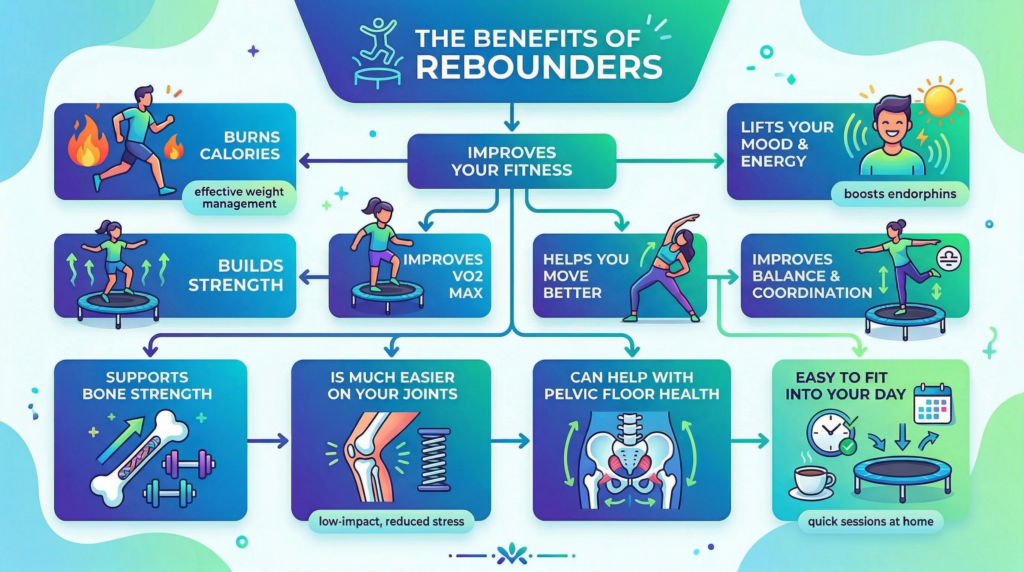
It Improves Your Fitness Without Beating You Up
Even a short session can get your heart rate up.
The difference is, unlike running or other high-impact cardio, you’re not dealing with sore joints afterwards.
That makes it much easier to stay consistent.
It Helps Your Body Move Better
There’s more going on than just cardio.
The constant movement helps keep your body active and responsive.
Over time, you tend to feel:
- Less stiff
- More mobile
- More comfortable moving
It Supports Bone Strength
As you get older, maintaining bone density becomes more important.
Rebounding provides a form of weight-bearing movement without the harsh impact.
So you’re still supporting bone health, but in a safer way.
It Builds Strength Without You Realising
Every time you bounce, your body is stabilising itself.
That means:
- Your core is working
- Your legs are working
- Your posture improves
You’re not just bouncing—you’re controlling movement.
It Improves Balance and Coordination
This is one of the biggest benefits as you get older.
At first, it can feel a bit awkward.
But that’s actually your body learning.
Over time, your balance improves, which carries over into everyday life.
It’s Much Easier on Your Joints
This is where rebounding really stands out.
Compared to running or other high-impact activities, it’s far more forgiving.
Less strain means:
- Less discomfort
- More consistency
- Less risk of injury
It Burns Calories Without Feeling Like Hard Work
You’re still working, but it doesn’t feel like a grind.
Time goes quickly, and that makes a big difference when it comes to sticking with it.
It Lifts Your Mood and Energy
This is something you notice straight away.
After a session, you generally feel:
- More awake
- Less stressed
- More positive
It’s a simple way to boost your energy.
It Can Help With Pelvic Floor Strength
This is something that doesn’t get talked about enough.
That gentle, repeated movement can help activate and strengthen the pelvic floor.
A lot of people notice improvements in:
- Stability
- Bladder control
It’s not something you’ll think about during the workout—but it’s a useful benefit.
It’s Easy to Fit Into Your Day
You don’t need a gym.
You don’t need much space.
You can do:
- 10 minutes
- 15 minutes
- 20 minutes
Whenever it suits you.
That makes it much easier to stay consistent.
My Experience Using a Rebounder
I’ll be honest—when I first looked at rebounders, I wasn’t sure how effective they’d be.
It didn’t seem like much of a workout.
But once I started using one regularly, that changed pretty quickly.
What stood out to me wasn’t just the physical side of things—it was how easy it was to actually stick to.
Some workouts feel like a chore. This didn’t.
One of the things I like most about it is how easy it is to fit into your day.
If the weather’s bad or you don’t feel like going anywhere, you can just jump on and get moving.
You can even do it while watching TV or listening to music, which makes it much easier to stay consistent.
Even short sessions felt worthwhile, and because it’s low impact, I didn’t have to deal with the usual aches that come with other forms of cardio.
I’ve found it works best when you don’t overthink it.
I personally use it to run on, I will run normally for 50 seconds then sprint for10 seconds. This gets my heart rate up and it improves my VO2 MAX.
Just get on, move for a bit, and be consistent.
It’s not about pushing yourself to exhaustion.
It’s about staying active in a way that feels sustainable.
Where This Fits In Your Routine
This is important.
Rebounding isn’t a replacement for strength training.
It works best alongside it.
Your Foundation Should Still Be Strength Training
The approach I recommend is simple:
Three short workouts per week (around 30 minutes each)
- Day 1: Legs
- Day 2: Shoulders and Back
- Day 3: Chest and Arms
Short, focused, and effective.
This helps you:
- Maintain muscle
- Stay strong
- Support long-term health
Use Rebounding as Your Cardio
You can add rebounding:
- On rest days
- After workouts
- As a quick daily session
Even:
10–20 minutes is enough
Getting Started (Keep It Simple)
You don’t need anything complicated.
Choose a Good Rebounder
Look for:
- A stable frame
- Good bounce
- Non-slip feet
A solid rebounder makes a big difference.
Start Slowly
- Begin with gentle bouncing
- Keep movements controlled
- Focus on balance
Build Up Over Time
As you get more comfortable:
- Increase your time
- Add variety
- Change pace
Stay Consistent
This is what matters most.
You don’t need long sessions.
10–20 minutes a few times a week is enough
Common Mistakes to Avoid
- Doing too much too soon
- Treating it as your only form of exercise
- Being inconsistent
Keep it simple and build from there.
Choosing the Right Rebounder
Not all rebounders are the same.
Some are more stable, some are quieter, and some are better suited for beginners.
If you’re thinking about getting one, it’s worth choosing something that feels solid and comfortable to use.
I’ll be putting together a full guide on what to look for and which rebounders are worth considering.
Final Thoughts
Rebounding isn’t complicated.
And that’s exactly why it works.
It’s simple, low impact, and easy to stick to.
When you combine it with:
- Strength training
- Good nutrition
- Consistency
It becomes part of a routine that actually works long term.
You don’t need perfect workouts.
You just need something you can keep doing.
Frequently Asked Questions
Is rebounding safe for over 50s?
Yes, rebounding is low impact and generally safe, especially compared to running. Start slowly and build up over time.
How long should I rebound for?
10–20 minutes per session is enough to see benefits when done consistently.
Can rebounding help with weight loss?
It can support weight loss when combined with proper nutrition and strength training.