
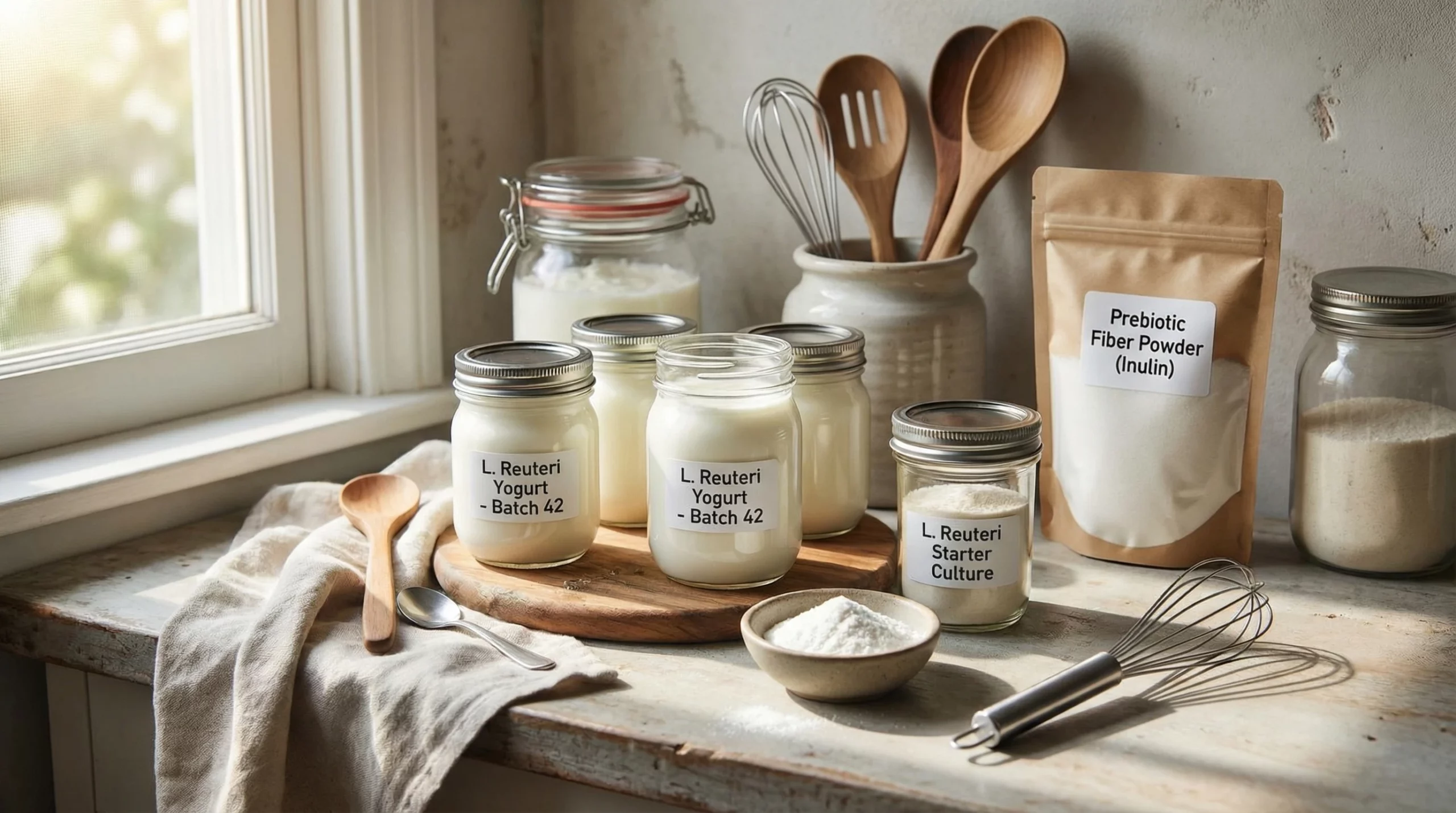
If you’re looking for a homemade way to add probiotics to your daily routine, L. Reuteri yogurt is a choice I always recommend for beginners. It supports your gut, can help with digestion and may even bring some benefits to immune health. Plus, I’ve found it really easy to make once you get the basics down. In this guide, I’ll walk through what L. Reuteri yogurt is, how to make it the simplest way, what can go wrong and how to fix it, and my personal tips from months of making it at home.
Understanding L. Reuteri Yogurt and Why It Matters
L. Reuteri (Lactobacillus reuteri) is a probiotic bacteria found naturally in healthy human guts. Many people, including myself, don’t get enough of it from everyday foods. Making L. Reuteri yogurt at home is a way to boost your intake without buying pricey supplements. The yogurt is creamy, tangy, and can easily be eaten by itself or added to smoothies, breakfast bowls, or fruit.
Unlike most storebought yogurts, this one is specially fermented to grow L. Reuteri. I started making it because I wanted the specific benefits of this probiotic, and I noticed that my digestion just felt better after a few weeks. There’s ongoing research on how L. Reuteri supports gut health, but many people turn to it for wellness reasons, hoping to ease bloating, support immunity, or encourage a more balanced gut.
What You’ll Need: Basic Ingredients and Tools
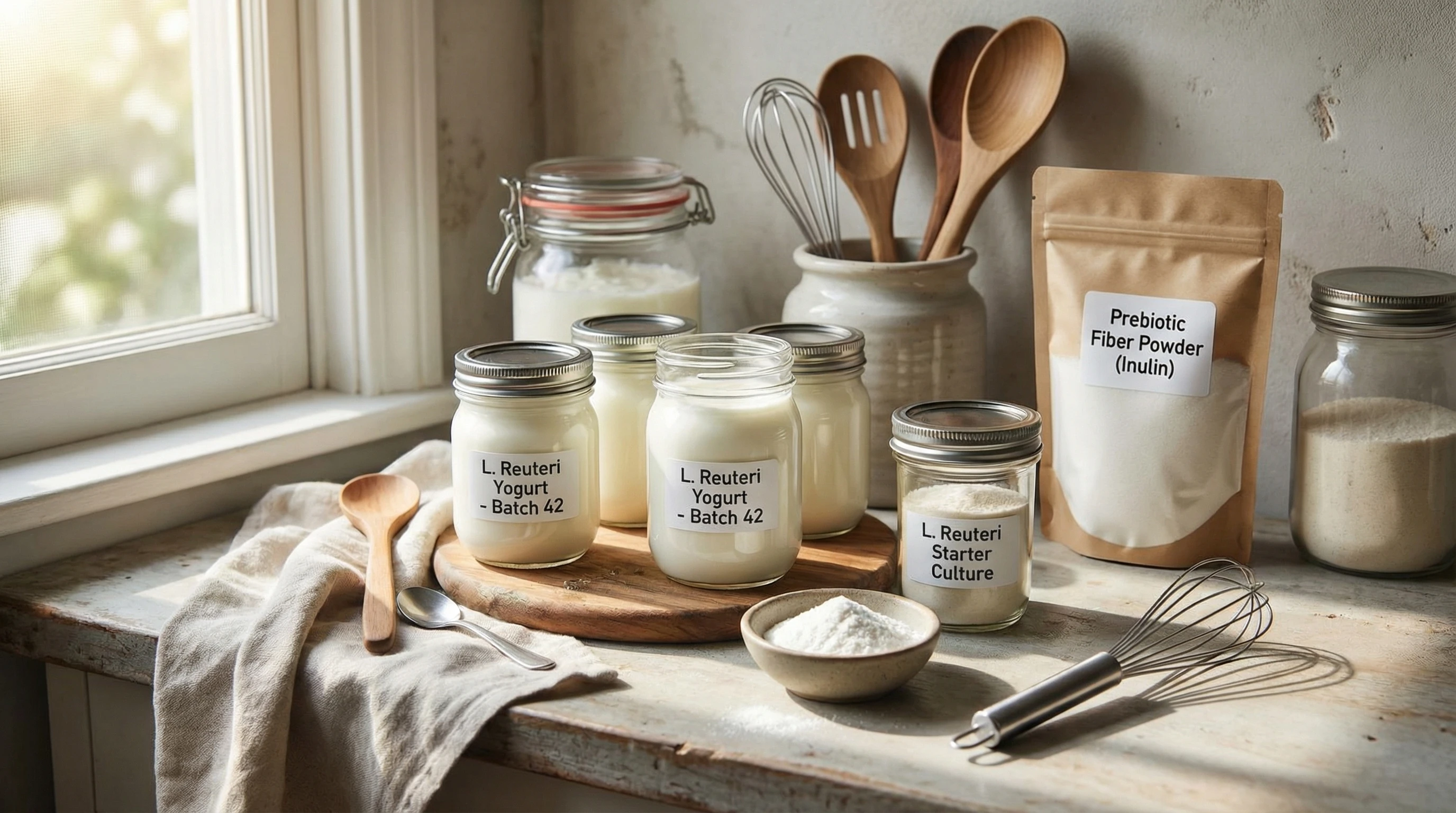
L. Reuteri yogurt has only a few key ingredients, but the details matter. Here’s everything I use for the easiest way to make L.Reuteri yogurt.
- A2 full cream milk (about 2L): The A2 type is gentler on some people’s digestion. Whole milk gives a thicker yogurt and fuller flavour, which I enjoy more.
- A2 full cream milk powder (half a cup): This makes the yogurt firmer and creamier, which helps prevent separation, a common stumbling block for beginners.
- L. Reuteri starter culture: You can use a starter purchased online, or simply two tablespoons of L. Reuteri yogurt from your last batch (once you have some made).
- Prebiotic fiber powder: This feeds the L. Reuteri bacteria, supporting faster growth and more tangy flavor. Inulin powder works great.
- Yogurt maker or fermentation device: Something that keeps the mixture at 38°C (100.4°F) for 36 hours. I have a simple electric yogurt maker, which takes out any guesswork.
Other helpful items include glass jars with lids, a clean spoon for mixing, and a small bowl for combining powders before pouring in all the milk. If you’d like, you can also keep a food thermometer on hand to double-check the incubation temperature, ensuring your yogurt grows the right bacteria.
Step-by-Step Recipe: My Everyday Method
I’ve tested a few versions, and this straightforward approach gives me thick, smooth yogurt every time. No need to preheat or boil the milk, which saves time and makes cleanup easier. The whole process feels approachable, even for a total beginner.
- Sterilize all equipment by pouring boiling water from a kettle over the jars, lid, and spoon. Let them air dry while you set up your ingredients. Good cleanliness helps ensure a healthy batch.
- Add the L. Reuteri starter (either powder or previous batch yogurt), prebiotic powder (if you’re using it), and half a cup of A2 milk powder to one of your jars or bowls.
- Pour in roughly one cup of the cold A2 full cream milk and stir well until everything is fully dissolved and blended. Mixing well at this point helps get a smooth final texture.
- Add the rest of the milk (until you reach just under the top of your jars), mix again gently, then place lids on the jars.
- Set your jars in the yogurt maker or fermentation device at 38°C (100.4°F). Leave them for 36 hours. Do not stir or disturb during this time; letting it stay still helps the yogurt thicken up.
- Once finished, the yogurt should be set, with a creamy top and little to no separation. Cool in the refrigerator for at least four hours before opening. The texture will thicken further as it chills.
I have made it this way for about nine months, and my batches come out perfectly firm, tangy, and rich. I’ve found this mix of milk and milk powder helps prevent the yogurt from turning watery or splitting, which can happen if your milk is too watery or you don’t use enough starter. If you want, try adding just a bit more milk powder for an even firmer consistency, or experiment with adding a dash of vanilla extract for flavour.
Common Challenges and How to Fix Them
Even small steps matter in yogurt making, especially when you’re growing specific probiotics like L. Reuteri. Here are some issues I ran into and what helped me fix them:
- Yogurt separates or is runny: This can be due to not enough milk powder, old starter, or temperature swings. I fixed it by always adding the full half cup of milk powder and letting my device preheat before adding jars.
- Sour or bitter flavour: That’s often caused by fermenting too long, or the starter not being fresh. I check the starter’s expiry date and taste it before using.
- White spots or mould on the surface: If you spot any mould at all, I toss the batch, sterilize all tools, and start fresh. Cleanliness is really important for this recipe. I always wipe down my workspace with vinegar or mild soap beforehand.
If you encounter other problems—such as a completely failed set—don’t be discouraged. Sometimes, even when everything seems right, a batch goes wrong, so try again with a fresh starter and double-check your process. Each attempt improves your skills and confidence.
Extra Tips for Beginners
When I first started, my main worry was getting the milk temperature right. As long as you use a dedicated yogurt maker or a water bath that holds at a steady 38°C, you don’t need to overthink it. I don’t preboil my milk if I use pasteurized A2 milk straight from the fridge. If you’re using milk that’s not pasteurized, boil it and let it cool first. Remember, using high-quality milk and fresh starter culture is key for a successful batch.
Also, keeping one jar of finished yogurt aside as your next starter is smart. I rotate my jars so that I always have a fresh starter ready every 7-10 days. If you take a break from making yogurt, or your starter gets too old, order a new L. Reuteri powder starter online and restart fresh. You can easily keep this habit going with just a bit of planning.
Some people like stirring fresh fruit or honey into each serving. Go ahead and try different toppings to mix in some variety. If you want a thinner yogurt for pouring over muesli, simply whisk in a bit of milk before serving. L. Reuteri yogurt’s tang makes it great for savory dips too—just add chopped herbs and a pinch of salt for a quick sauce.
Ways to Enjoy and Store L. Reuteri Yogurt
This yogurt works in many recipes. I eat it by the spoonful for breakfast, add honey and berries, or blend it into smoothies. The flavor is tangy but not overly sour, and the texture is thick and creamy, much like classic Greek yogurt instead of a drinkable one. It’s an easy snack after exercise, a base for overnight oats, or even a topping on pancakes. My family loves it with a swirl of homemade fruit compote.
Store it in the fridge for up to 10 days. I always put a date on my jars with a small piece of tape. If it starts to smell odd or develops a slimy texture, I throw it out and make a fresh batch. Freezing is possible but will change the texture, so I prefer making smaller batches more often. This way, there’s less waste and the freshest taste every time.
Frequently Asked Questions for First-Time Yogurt Makers
Here are some things I get asked often by friends curious about making their own L. Reuteri yogurt:
Question: Can I use regular cow’s milk?
Answer: Yes, but I find A2 full cream milk makes a thicker, gentler yogurt. Regular milk might separate a bit more, but works in a pinch.
Question: Why add prebiotic powder?
Answer: Prebiotic fiber feeds the good bacteria as they grow, giving a richer taste and more health benefits. Inulin or potato starch work well; you can skip it if you want, but your yogurt might be a bit less tart and creamy.
Question: Do I really need a specific yogurt maker?
Answer: I recommend it for holding the right temperature. If you’re handy in the kitchen, you can use a sous vide device, but a dedicated yogurt maker is fuss-free.
Question: How can I tell if the yogurt has gone bad?
Answer: Trust your senses! If it smells off, looks mouldy, or tastes strange, it’s not worth the risk. It should taste fresh and tangy with a clean, creamy texture.
Question: Can I flavour my batch during fermentation?
Answer: It’s best to add any flavourings like fruit, honey, or spices after fermentation and chilling. Adding things beforehand may affect how the bacteria grow and change the texture, so stick to the basic loop ingredients at first for best results.
Question: How do I re-culture yogurt if I forget to save some as a starter?
Answer: No worries; just use a new L. Reuteri starter powder from a reputable source to begin again. It happens to everyone sooner or later!
Real-Life Experience and Final Thoughts
Making L. Reuteri yogurt has become part of my weekly routine. It’s easy once you get into the habit, and the process is actually fun to learn. I always feel good knowing exactly what’s in my food, and I like the simplicity. You don’t need fancy gear or experience; just patience, attention to hygiene, and a willingness to experiment with milk types until you find your favourite texture and taste.
L. Reuteri yogurt gives you a homemade way to add helpful bacteria to your diet, and I’ve seen real benefits for my own digestion since I made it a regular habit. If you’re just getting started, follow the steps, keep things clean, and don’t stress over little mistakes. It really is a beginner friendly ferment that anyone can master with a bit of practice. Once it’s part of your kitchen adventures, you’ll be surprised how often you want to make a fresh batch and share the results with family and friends.
The Yogurt Maker I Use
This is the best yogurt maker I have found it has a 36 hour timer which you need for L.Reuteri and it has a temperature range of between 25 and 50 degrees Celsius (77 and 122 Fahrenheit)
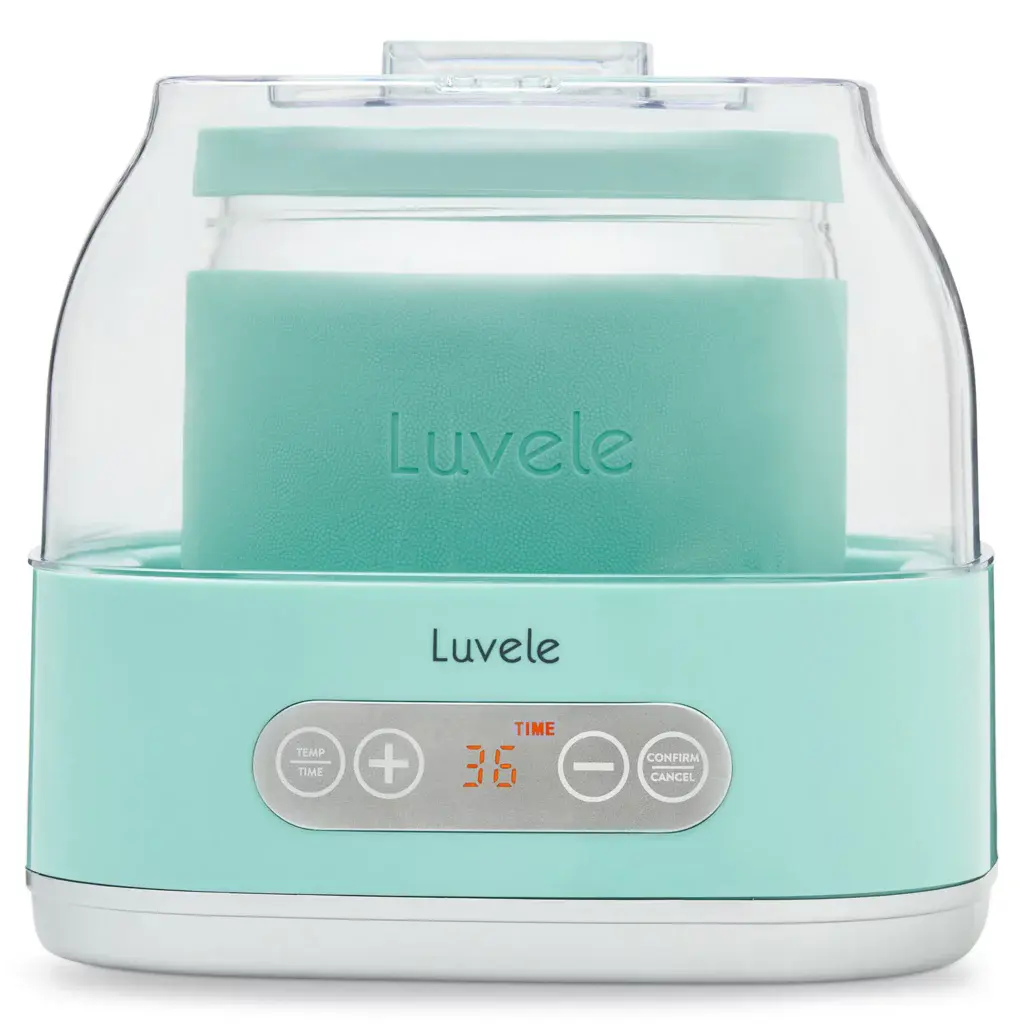
Create your favorite probiotic packed, preservative & additive free yogurt the pure & natural way with the Luvele Pure Plus Yogurt Maker. Featuring our 36 hour digital timer for more flexibility with more types of yoghurt recipes, as well as incubation temperature settings of between 25 and 50 degrees C, with 1 degree increments. Set the perfect temperature to maximize the good bacteria to grow and the live active cultures to flourish. We include our newly designed air-tight silicone lid for a plastic free yogurt making environment, as well as our silicone sleeve for the 2L glass container, that creates better grip when handling.
Luvele Pure Plus Yogurt Maker | 2L https://www.luvele.com.au/products/pure-yoghurt-maker-2l-
L.Reuteri starter culture https://amzn.to/4rwvqPg
Pre Biotic Powderhttps://amzn.to/4rrFKbb
If you buy any of these products I will get a commission but it’s at no extra cost to you.
Thanks John.