

A rebounder looks like one of the simplest pieces of equipment you can buy: a round frame, a mat, something that makes it bounce. But walk into the buying decision without a checklist and you’ll end up choosing on price or looks, and either one can land you with a mini trampoline that creaks, sags, or just sits folded in a corner after week three. The mechanical details below are the ones that actually determine whether a rebounder holds up and feels good to use, regardless of your age or how fit you are right now.
Bungee cords or springs: which suspension type to pick
Every rebounder uses one of two suspension systems, and this is the first fork in the road. Spring-based rebounders use metal coil springs, the same basic idea as an old-school trampoline. They tend to be cheaper and give a firmer, more responsive bounce, but the springs can squeak over time and they transmit more impact into your joints.
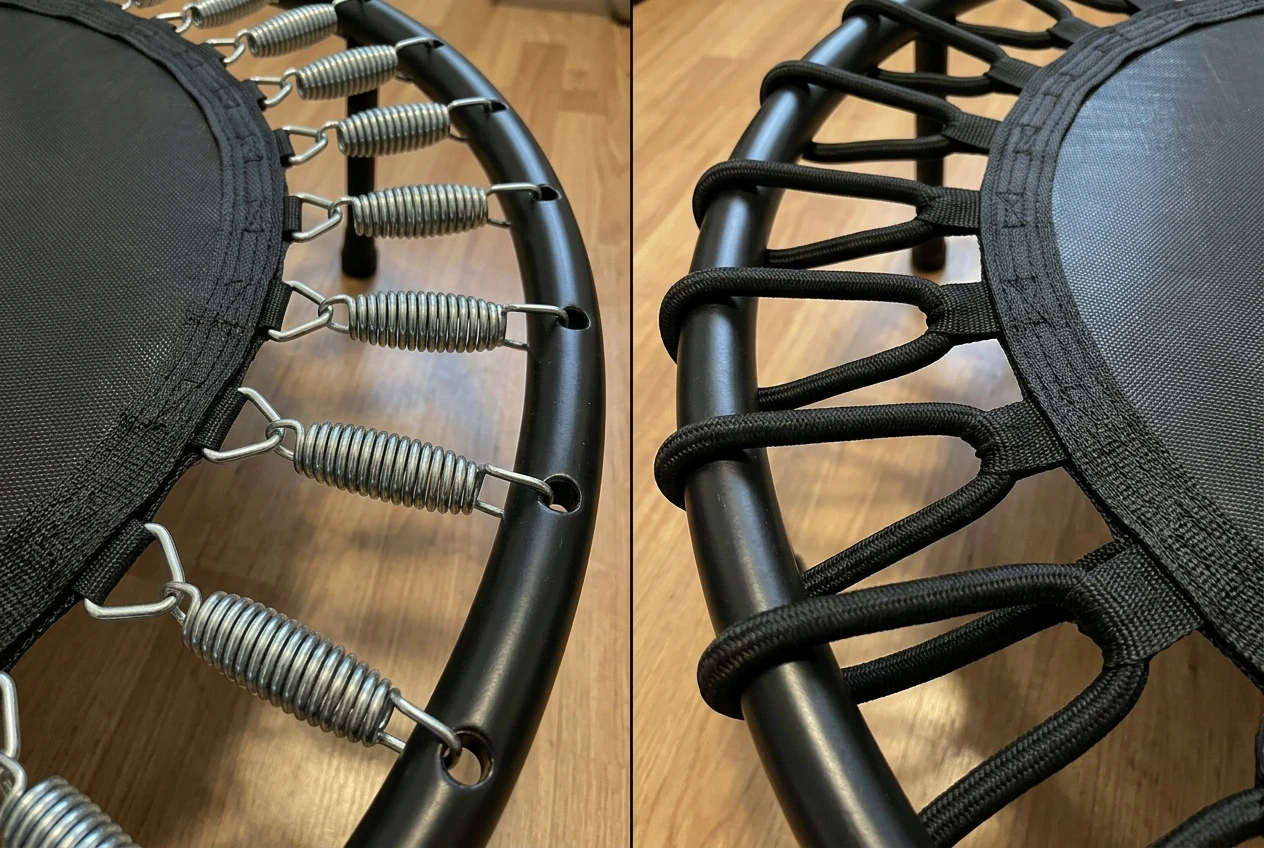
Bungee cord systems use heavy-duty elastic cords instead of metal springs. They cost more but give a softer landing, run quieter, and don’t rust or fatigue in the same way springs do. For anyone concerned about knees, hips, or lower back strain, bungee suspension is generally the better match. If you want the fuller breakdown of why that matters specifically for joint health after 50, the companion guide on choosing a rebounder after 50 goes into that in more depth.
Weight capacity: why the number on the box matters more than you think
Every rebounder lists a maximum user weight, and it’s tempting to skim past it if the number is higher than your own body weight. Don’t. That listed capacity is usually tested under static load, not the repeated dynamic force of someone actually jumping on it, which is a very different kind of stress on the frame and springs or cords.
A rebounder rated for, say, 220 pounds static capacity is not built for a 200-pound person bouncing on it for twenty minutes a day. As a rough rule, look for a weight rating comfortably above your own body weight, with some buffer. A higher-rated frame generally means thicker steel tubing, better welds, and suspension components built to handle sustained use rather than occasional light bouncing.
Mat size and jump surface: how much room you actually need
Mat diameter varies more than people expect, typically somewhere between 36 and 44 inches. A bigger mat gives you more margin for error, which matters if your balance isn’t what it used to be or if you’re still getting used to the sensation of bouncing. A small jump surface can feel fine when you’re standing still and testing it in a shop, but once you’re moving, landing slightly off-centre on a narrow mat is how ankles get rolled.
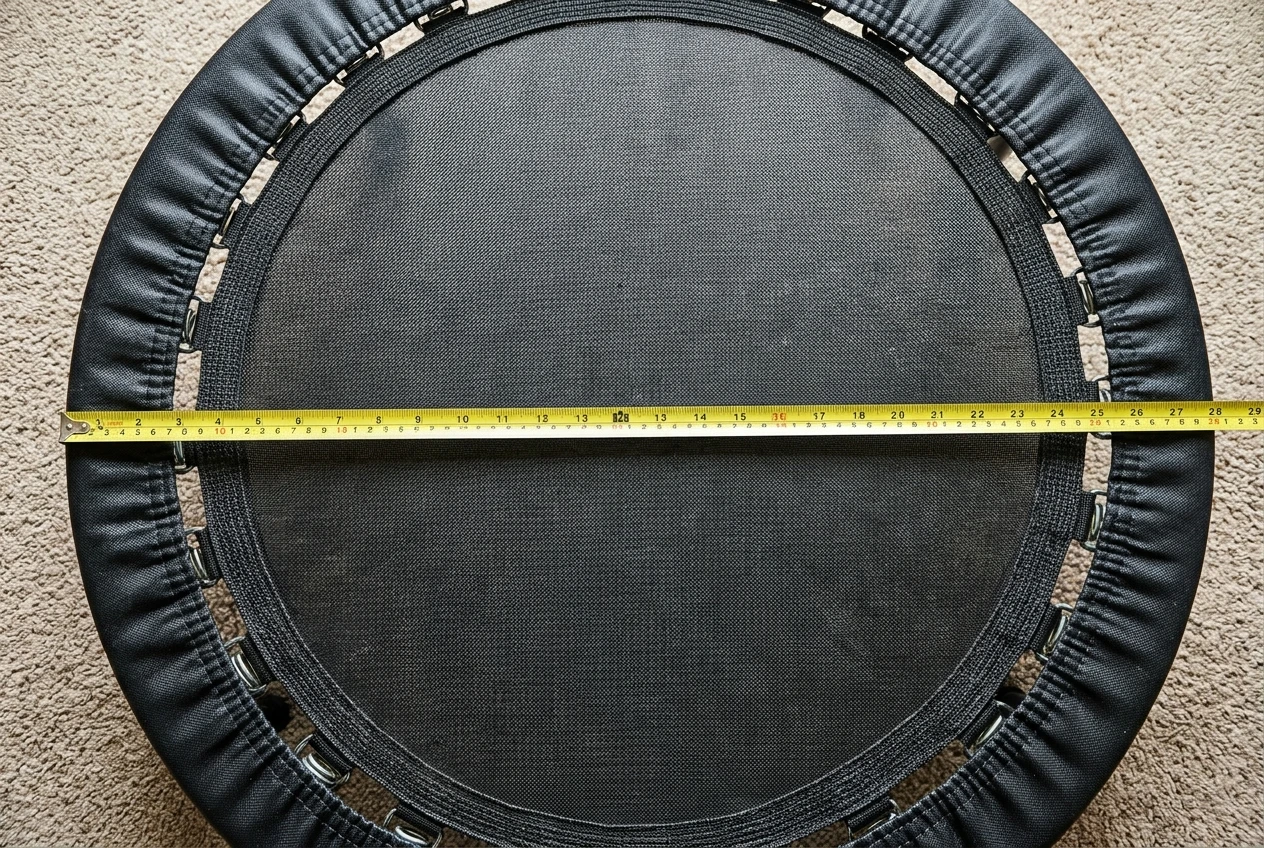
Bigger mats also mean a bigger overall frame, so check this against the next section, because a generous jump surface is no good if it won’t fit in the room you’ve set aside for it.
Frame height and leg design: what affects stability on uneven floors
Frame height, measured from the floor to the top of the mat, typically sits somewhere between 8 and 12 inches. A lower frame is generally easier to step on and off safely, which matters if you’re using the rebounder on your own without anyone nearby to steady you. A taller frame can feel less stable when stepping on, particularly for anyone with reduced ankle mobility.
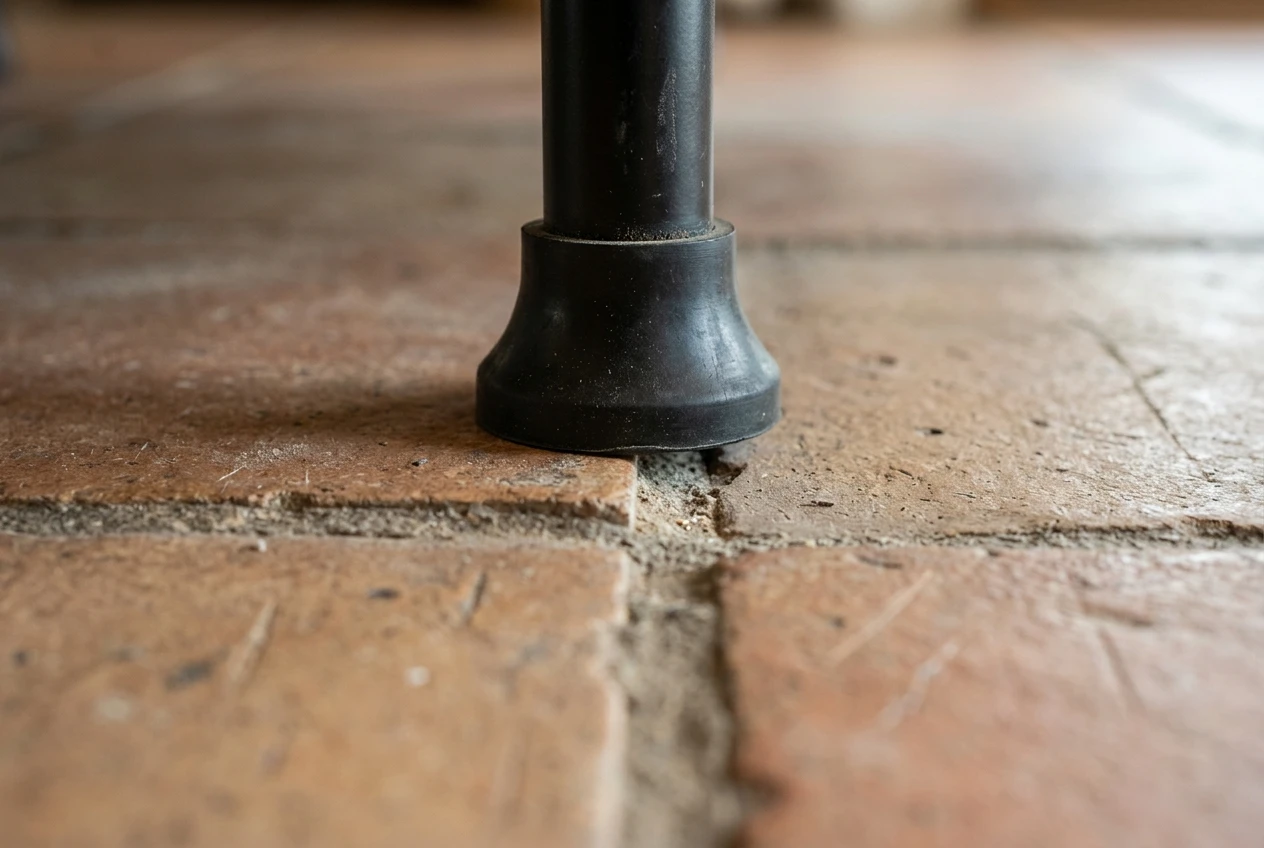
Leg design matters just as much as height. Look for legs with wide rubber feet or a wide base footprint rather than narrow metal points, especially if your floor isn’t perfectly flat. Hardwood floors that have settled slightly, uneven tile, or carpet over an old subfloor can all introduce a small rock or wobble that a narrow-footed rebounder will exaggerate with every bounce.
Noise level: what quiet rebounders have in common
Noise matters more than most buyers think about before they buy, particularly if you live in a flat, share walls with neighbours, or want to use the rebounder early in the morning or late evening without waking anyone up. The quietest rebounders consistently share two features: bungee cord suspension instead of springs, and a solid, well-welded frame rather than one held together with loose bolts that rattle.
Spring-based units are almost always louder, both from the springs themselves and from the metal-on-metal contact where springs attach to the frame. If quiet operation matters to you, this is one more point in favour of bungee suspension, and it’s worth reading actual owner reviews that specifically mention noise rather than relying on a product description, which will never volunteer that information.
Stability bar: when you need one and when you don’t
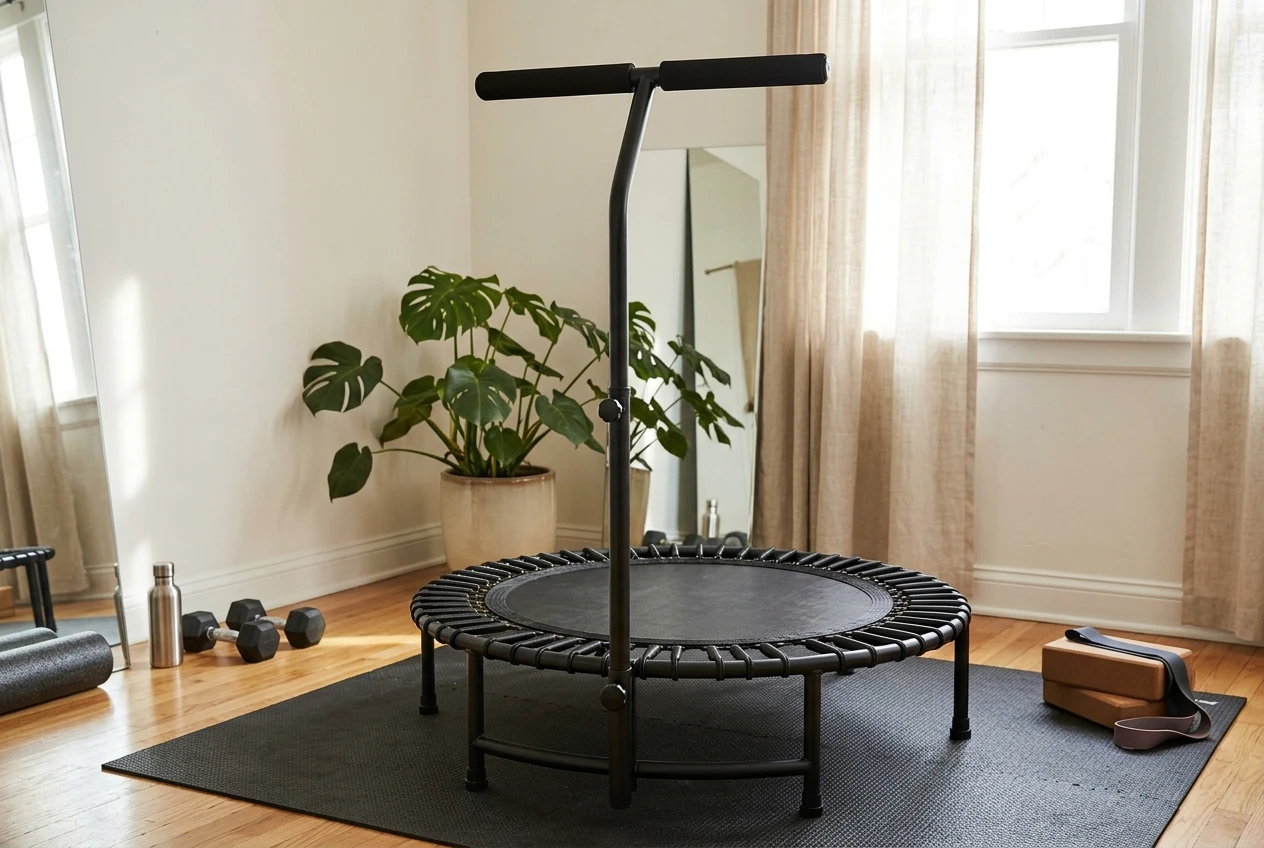
A stability bar, the tall handle that extends up from the frame for you to hold onto, is a genuinely useful feature for some buyers and an unnecessary expense for others. If you’re new to rebounding, have any history of balance issues, or simply want the extra confidence of something to hold while you find your rhythm, a stability bar is worth the extra cost and the extra floor space it needs.
If you’ve used a rebounder before, have good balance, or plan to do more dynamic movements that a bar would get in the way of, you likely don’t need one. Some bars are removable, which gives you the option to start with support and take it off later, and that flexibility is worth looking for if you’re unsure which camp you fall into.
Folding, storage and portability for small homes
Not every rebounder folds, and among the ones that do, the mechanisms vary a lot in quality. Look for a folding hinge that locks securely in both the open and closed position, because a frame that doesn’t lock properly when open is a stability risk, not just a storage inconvenience.
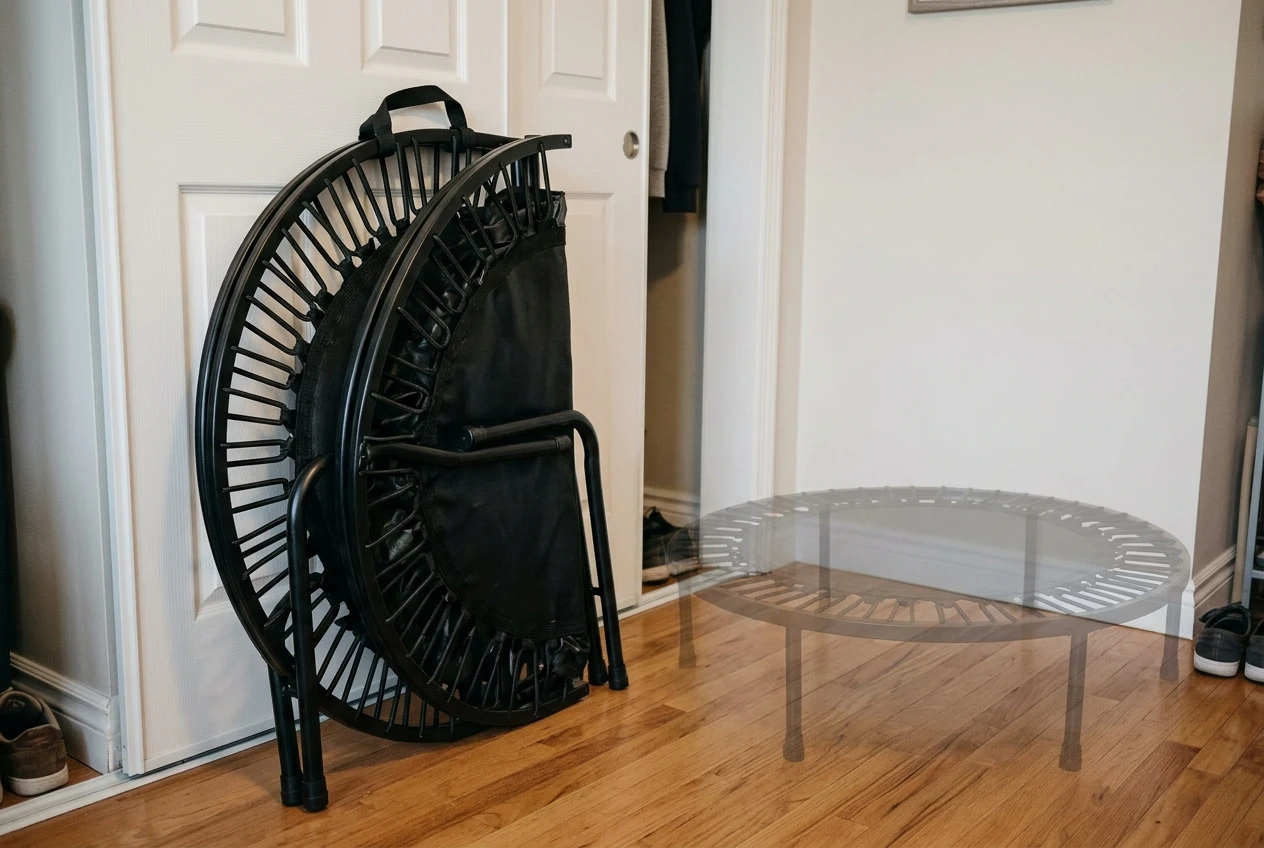
If you’re working with limited space, check the folded dimensions, not just the open ones, and check the weight too. A rebounder that folds flat but weighs 40 pounds is still awkward to move regularly if you’re planning to store it in a closet and bring it out daily. Carry handles, where included, make a real difference here.
Warranty and build quality signs worth checking before you buy
Warranty length is one of the more honest signals a manufacturer gives you about how long they expect the product to last. A rebounder with a 90-day warranty is telling you something different than one backed for five years, even if they look similar in photos and cost about the same.
Beyond the warranty itself, check what it actually covers. Some warranties cover the frame but not the mat or suspension cords, which are the parts most likely to wear out first with regular use. A few other build quality signs worth checking before you buy:
- Welded frame joints rather than bolted connections, which tend to loosen with repeated impact
- A mat made from permatron or a similarly rated UV-resistant, sweat-resistant material rather than a generic woven fabric
- Powder-coated frames, which resist rust better than plain painted metal
- Reviews that specifically mention how the product held up after several months, not just first impressions
None of these checks takes long once you know to look for them, but skipping all of them is exactly how people end up with a rebounder that wobbles, squeaks, or sags within the first few months.
If you’re over 50 and want the shortlist built specifically around joint-friendly rebounders, read the companion guide: Buying a Rebounder After 50: What to Look For Before You Spend.