Mental health is your emotional, psychological and social wellbeing: how you think, feel and cope with daily life. Everyday habits support it because the body and mind work as one system. Regular movement, a comfortable weight, enough water and good posture all make it easier to sleep, concentrate and handle stress.
What Is Health, and Why Is Mental Health Part of It?
Health is the condition of your body and mind working together, and mental health is the part that shapes how you experience everything else.
The World Health Organization describes health as a state of complete physical, mental and social wellbeing, and not only the absence of disease.
That definition matters after 50, because it is easy to treat aches, weight and energy as one topic and low mood or worry as another.
In practice they overlap constantly.
When you sleep badly, your mood suffers.
When your mood is low, you move less.
When you move less, your body feels stiffer and heavier, and that feeds back into your mood.
I have been overweight and unfit, and I have learned to diet and exercise, so I write about this from the practical side.
This article covers the everyday basics that support mental health, and it is general information rather than medical advice.
If you are struggling with low mood, anxiety or thoughts of harming yourself, talk to your doctor or a mental health professional.
Habits can support treatment, but they do not replace it.
Can Exercise Improve Mental Health?
Yes, regular physical activity is linked with better mood, lower stress and better sleep, and that is why it is one of the most commonly recommended habits for mental wellbeing.
You do not need a gym membership or a hard session to start.
A walk counts, and so do gardening, swimming and climbing stairs.
Strength training adds something different, because lifting weights lets you see yourself getting stronger, and that builds confidence.
The deeper detail on how strength training affects the brain after 50 has its own article, which I link at the end of this one.
Here I want to keep to the basics.
- Choose something you can do without dreading it.
- Start at a level that leaves you feeling better afterwards, not flattened.
- Do it at roughly the same times each week so it becomes routine.
If you are starting from unfit, which is where I began, the first goal is simply to turn up.
Fitness follows from turning up, and you can raise the effort later.
How Do I Get Healthy Without Overhauling My Whole Life?
Change one small habit at a time and keep it until it feels ordinary, then add the next.
Dramatic overhauls tend to fail because they rely on motivation, and motivation rises and falls.
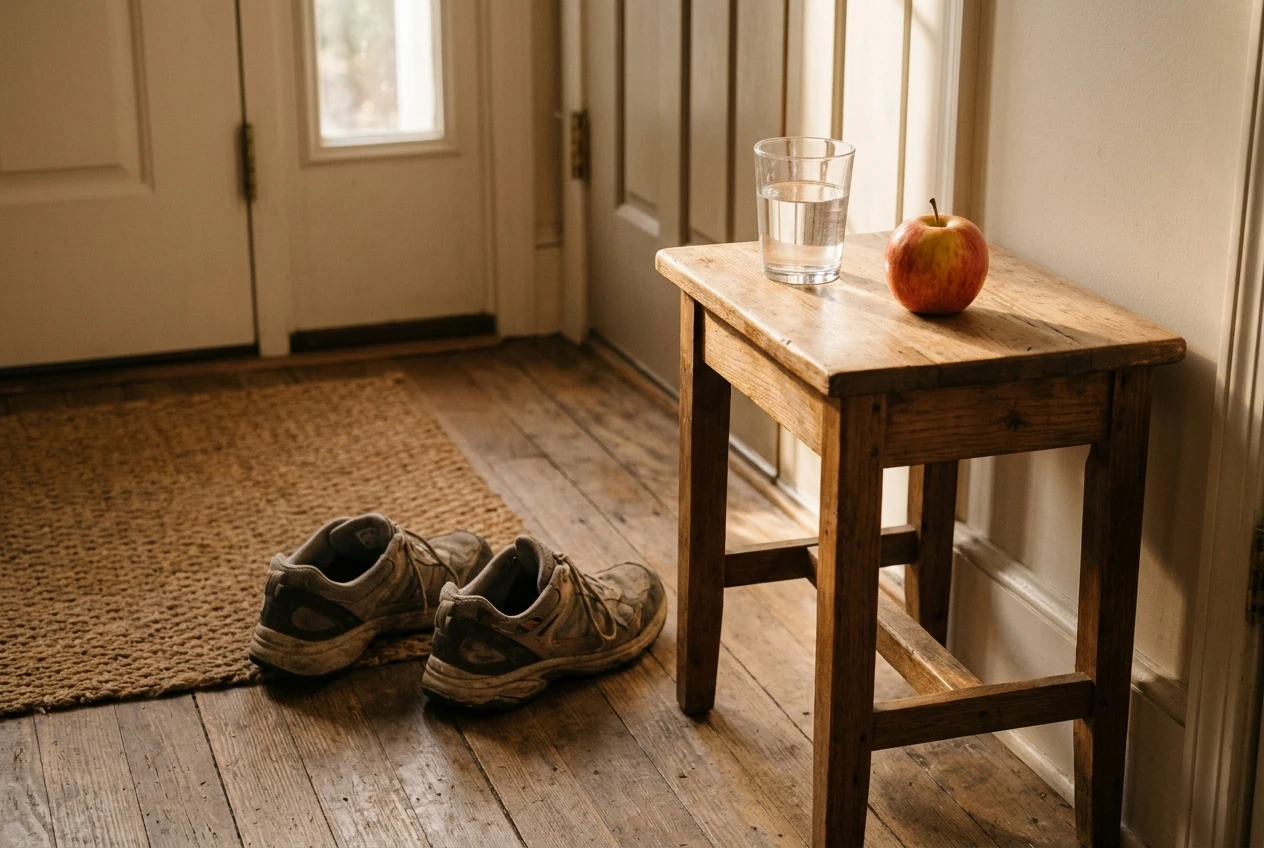
A single habit, repeated, relies on routine instead.
Here is a sensible order for most people over 50:
- Walk a little every day, even ten minutes.
- Drink water regularly through the day.
- Add a protein source and a vegetable to the meals you already eat.
- Begin simple strength work two or three times a week.
- Go to bed and get up at similar times.
You do not need to do all five this week.
Pick the first one and let it settle.
When you are ready for strength training, my approach is three short, hard workouts a week on non-consecutive days, such as Monday, Wednesday and Friday.
Put technique before weight.
If a barbell feels awkward, use machines or dumbbells.
Keep one or two reps in reserve at first, add weight only when the last set feels controlled, and give a routine a proper run before you change it.
The 3-day, 30-minute plan on this site is the worked example, built as legs, then shoulders and back, then chest and arms.
When motivation dips, my article on how to stay consistent with exercise after 50 covers what to do next.
What Is a Healthy Weight for My Height?
A healthy weight for your height is usually judged with body mass index, or BMI, which divides your weight by your height squared.
Most health services, including the NHS, publish a free BMI calculator that shows which category you fall in and gives the standard range for adults.
BMI is a rough screening tool, and it has limits.
It cannot tell muscle from fat, so a person who has built muscle can read as heavier than they are.
It also says nothing about where you carry weight, and fat around the middle carries more health risk than fat elsewhere.
For that reason, many doctors look at waist measurement alongside BMI.
Weight and mental health influence each other in both directions.
Carrying extra weight can make movement uncomfortable, and low mood can make food choices harder.
A gentle target works better than a number you have to hit by a date.
- Ask your doctor what a realistic range is for your age and health.
- Aim for slow, steady change rather than quick loss.
- Track how your clothes fit and how you feel, not only the scale.
Strength training helps here, because muscle supports your joints and keeps your body working well while you lose fat.
How Much Water Do I Need for Good Health?
How much water you need depends on your size, your activity, the weather and your health, so there is no single number that suits everyone.
A useful everyday check is the colour of your urine.
Pale yellow usually means you are drinking enough, and dark yellow suggests you need more.

Thirst can become less reliable as we get older, so it helps to drink on a schedule rather than waiting to feel dry.
Mild dehydration can bring headaches, tiredness and trouble concentrating, and those can easily be mistaken for a bad mood.
Some simple ways to build the habit:
- Have a glass of water when you wake up.
- Keep a bottle where you sit or work.
- Drink a glass with each meal.
- Sip water during and after exercise.
Tea, coffee and the water in food all count towards your intake.
If you have a heart or kidney condition, or take medication that affects fluid balance, ask your doctor how much to drink, because some conditions call for limits.
How Do I Fix Rounded Shoulders and Improve Shoulder Health?
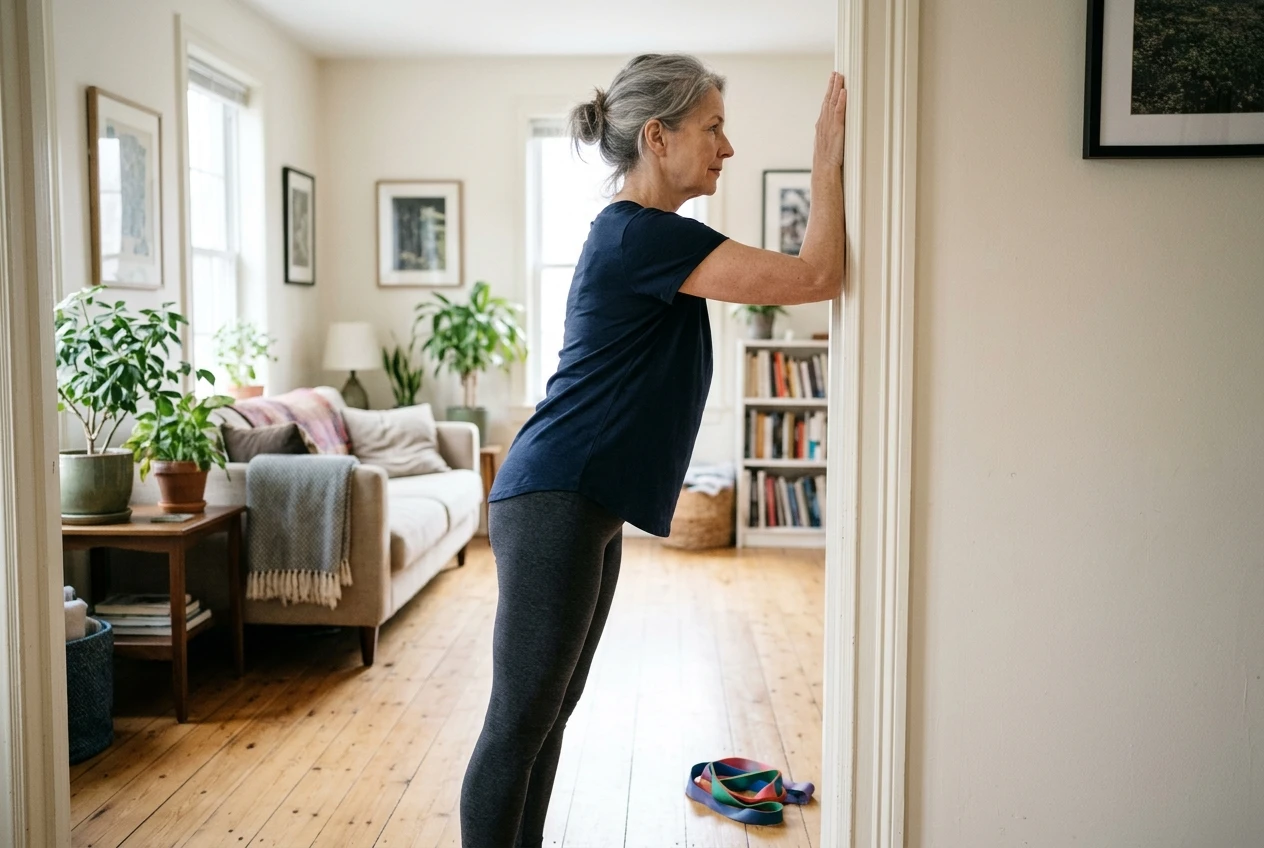
You fix rounded shoulders by stretching the tight muscles in your chest and strengthening the weak muscles in your upper back.
Hours of sitting, driving and looking at screens pull the shoulders forward.
Over time the chest muscles shorten and the back muscles stretch and weaken.
Posture also affects how you feel in a plain, physical way.
Slumping makes breathing shallower and the body feel heavier, while standing tall feels more open and alert.
Here are a few simple moves to try:
- Doorway chest stretch: place your forearm on a door frame and gently turn your body away until you feel a stretch across the chest.
- Wall slides: stand with your back to a wall and slowly slide your arms up and down, keeping contact with the wall as far as is comfortable.
- Rows: pull a dumbbell or a resistance band towards your ribs, squeezing your shoulder blades together.
Rows belong on the shoulders and back day of the 3-day plan, so your regular routine strengthens the muscles that hold you upright.
Stop any movement that causes sharp pain.
If you have an existing shoulder injury, check with a doctor or physiotherapist first.
Can Lower Back Stretches and Green Tea Help Too?
Gentle lower back stretches can ease stiffness, and green tea can be a calming daily ritual, though neither is a treatment on its own.
Lower back stiffness is common after 50, and it often comes from sitting for long periods.
Easing it makes everything else, from walking to lifting, more comfortable.
These are gentle options to try on a mat or a firm bed:
- Knee to chest: lie on your back and hug one knee towards you, hold, then switch sides.
- Pelvic tilt: lie with knees bent and gently flatten your lower back against the floor, then release.
- Cat and cow: on hands and knees, slowly round your back, then lower it, moving with your breath.
Move slowly, breathe out through each stretch, and never push into pain.
If back pain is severe, spreads down a leg or does not settle, see a doctor.
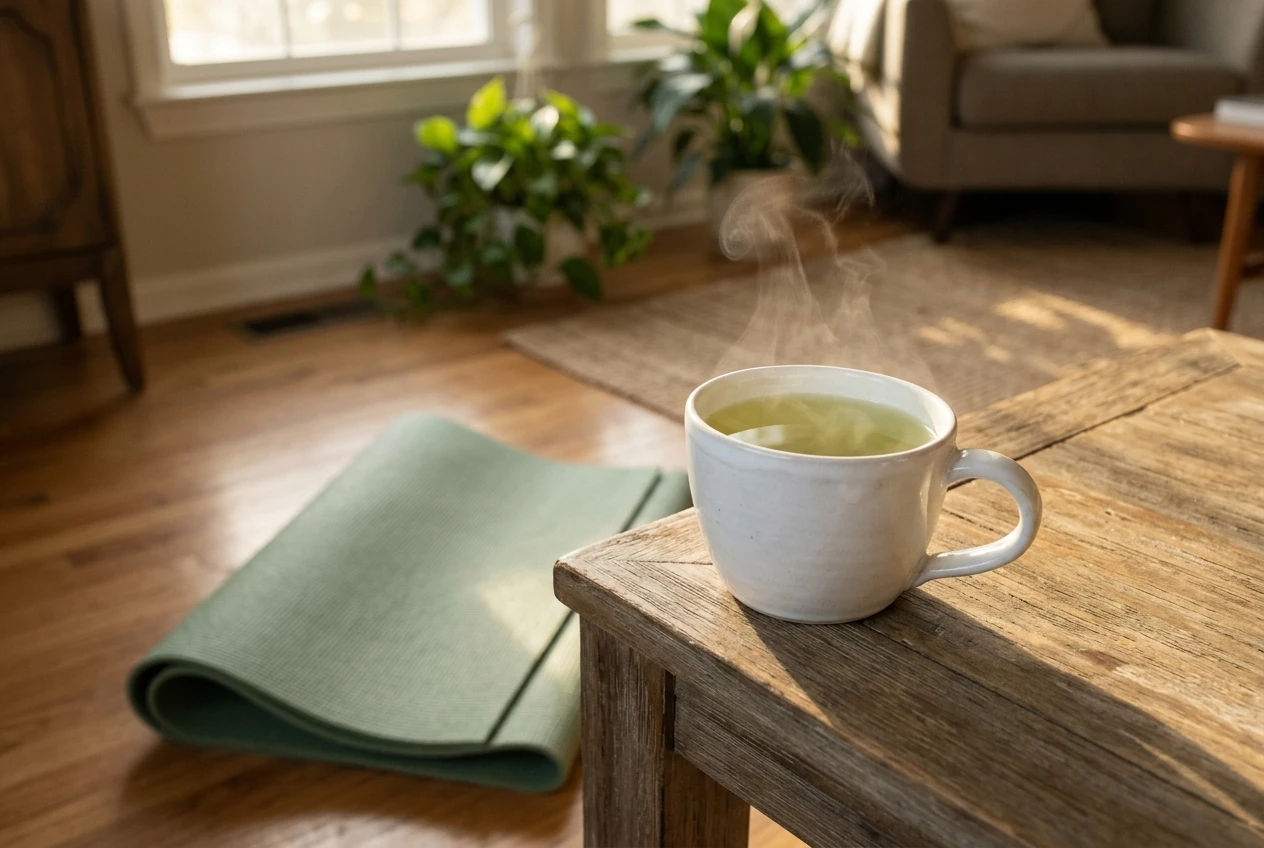
Green tea contains caffeine and an amino acid called L-theanine.
Some people find the caffeine content lower than coffee, which suits them better.
I would not promise it will change your mental health.
What it offers is a pause in the day and a warm drink that replaces something sweeter.
Because it contains caffeine, avoid it late in the evening if it affects your sleep.
Can Reading Positive Books and Listening to Positive Audiobooks and Podcasts Help?
They can help, because what you read and listen to shapes your attention and your mood across the day.
Reading and listening will not cure anything.
They give your mind something steady to dwell on, which makes it easier to ease out of worry and negative news.
Audiobooks and podcasts suit walking particularly well, since they turn exercise time into thinking time.
You can pair the two habits so that each supports the other.
- Save a particular audiobook or podcast for walks only.
- Read a few pages before bed instead of scrolling.
- Choose material that is practical or encouraging, and drop anything that leaves you anxious.
If you like classic self-improvement writing, I have written an honest review of Og Mandino’s The Greatest Miracle in the World.
Whatever you choose, treat it as one habit among several.
Mental health is supported by movement, food, water, sleep, posture, company and the things you feed your mind.
None of them has to be perfect, and each one you add makes the others easier.
Read next: What Strength Training Actually Does to Your Brain After 50, then try the 3-day, 30-minute plan as your first worked routine.