
How to stay consistent with exercise after 50 comes down to three habits: train three short, hard sessions a week on non-consecutive days, follow a minimum-session rule on bad days, and keep the same routine for a full block before you judge it.
I was overweight and unfit, and I have learned to diet and exercise since.
What follows is a plan for the moment you want to skip.
Why Do You Want to Quit After a Few Weeks?
Most people quit after a few weeks because the early novelty has worn off while the visible results have not yet arrived.
The first sessions feel new, and you are motivated by the decision itself.
By week three or four, the workouts feel routine, your muscles may still ache, and the mirror looks the same.
That gap is where most routines die.
Three other causes are common:
- The plan is too long, so a busy day makes it impossible to fit in.
- The plan is too frequent, so one missed session feels like failure.
- The routine gets swapped for a “better” one before it has had time to work.
Each of these can be fixed with structure rather than willpower.
Willpower is unreliable on a tired Tuesday evening, so the plan has to work without it.
What Should You Do on a Day You Really Don’t Want to Train?
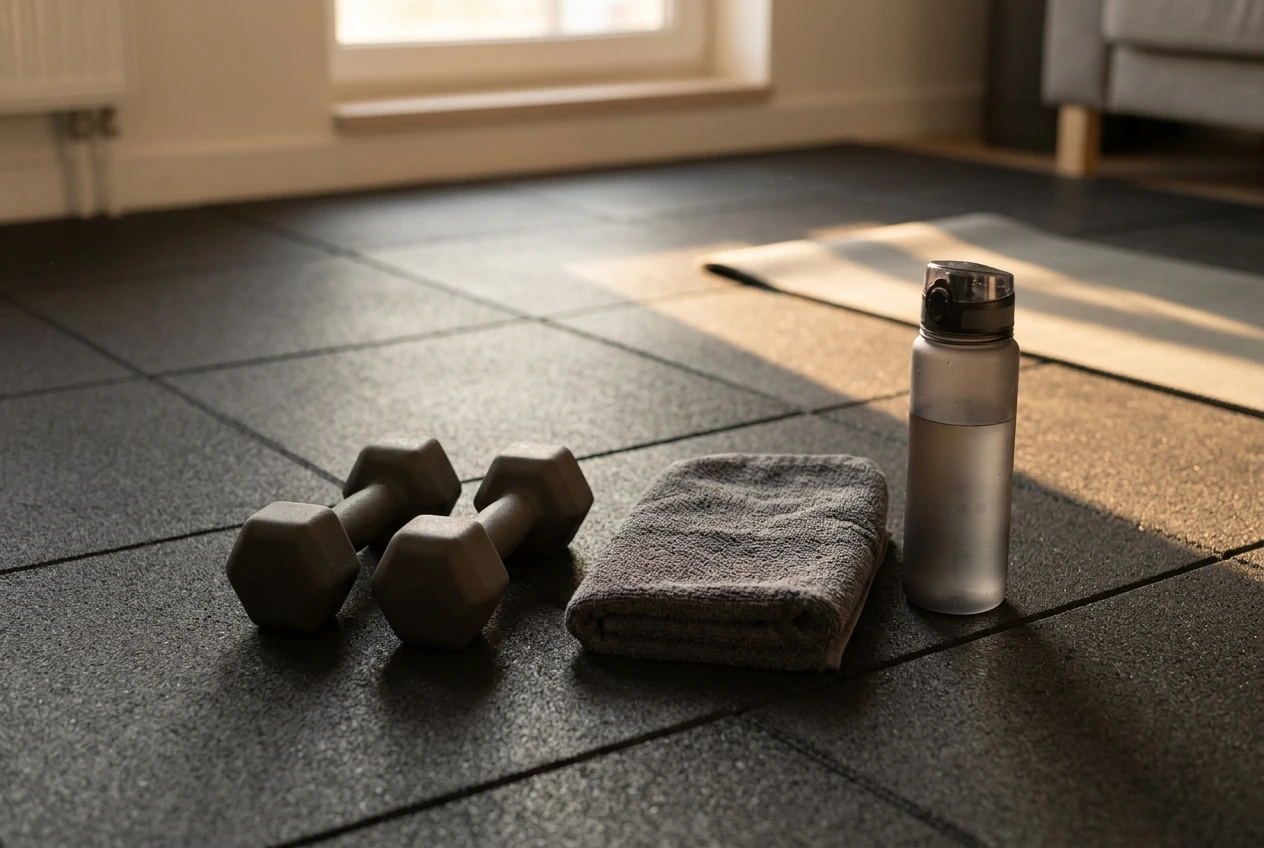
On a day you really don’t want to train, do a minimum session instead of deciding between a full workout and nothing.
The rule is simple: you start the session, and you only have to finish the minimum.
A minimum session could look like this:
- Warm up for five minutes.
- Do the first exercise of the day’s workout, for two sets.
- Stop there if you still want to.
Most of the resistance is in starting, and once you are in the gym or have the dumbbells in your hands, you will often carry on.
If you don’t, the session still counts.
It keeps the habit alive, and a habit that survives a bad day is worth more than one perfect workout followed by a week off.
Keep the weight light on these days and put technique first.
A minimum session is not a test of strength.
It is a way of showing up.
How Do Three Short Workouts a Week Make Consistency Easier?
Three short workouts a week make consistency easier because they are quick enough to fit around real life and spaced widely enough to leave you recovered for the next one.
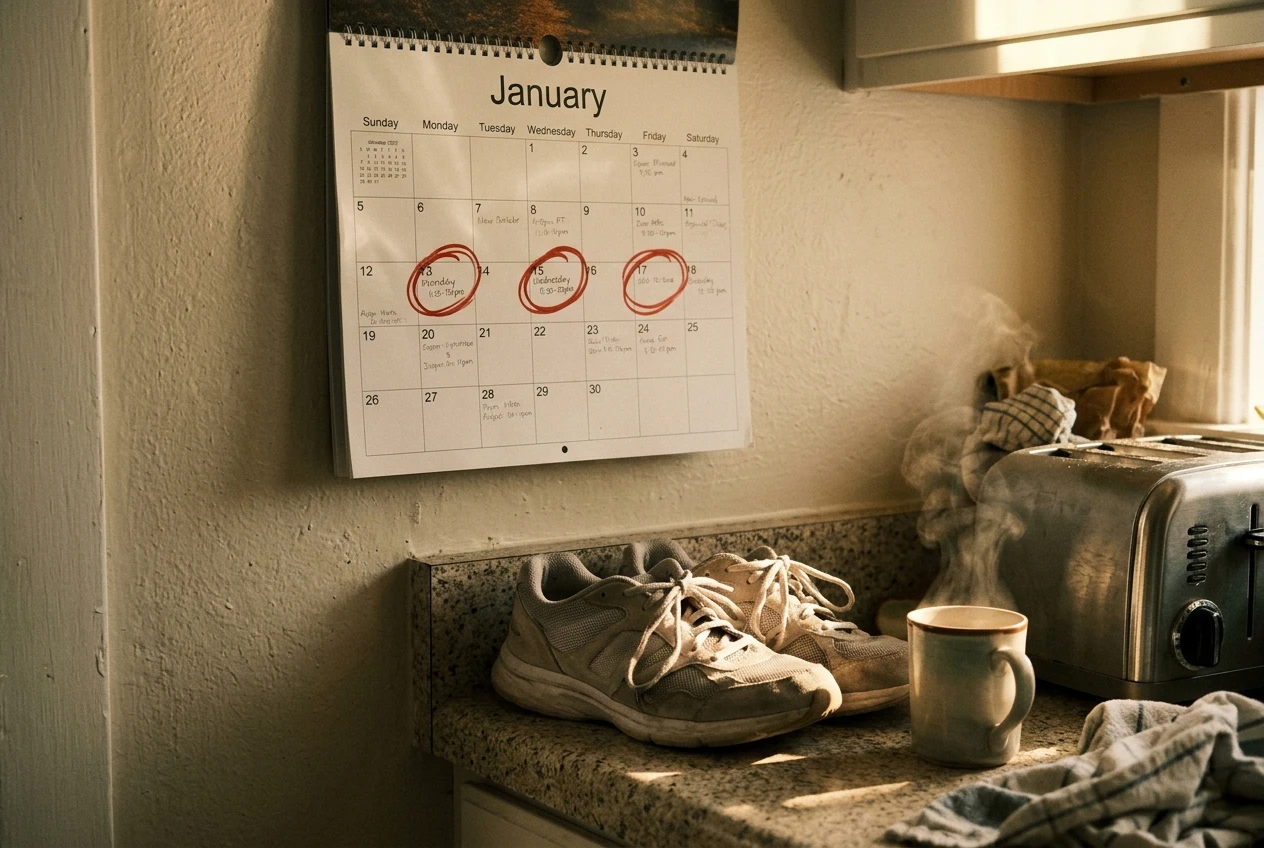
I recommend three short, hard sessions on non-consecutive days, such as Monday, Wednesday and Friday.
A simple split covers the whole body across the week:
- Legs
- Shoulders and back
- Chest and arms
Each session stays focused, so none of them turns into a two-hour commitment you dread.
“Hard” does not mean grinding yourself into the floor.
At first, keep one or two reps in reserve on every set, which means stopping when you could have done one or two more with good form.
That level of effort is enough to make the work count and leaves you able to come back two days later.
Technique comes before weight.
If a barbell feels awkward, use machines or dumbbells instead.
Add weight only when the last set of an exercise feels controlled, not when you think you ought to be lifting more.
Rest days in between are part of the plan, and they are not wasted time.
If you want the full detail on sleep, protein and rest, my guide on how to recover after 50 covers it.
Is Your Routine Failing or Have You Not Given It Long Enough?
In most cases the routine has not been given long enough, because strength gains come from repeating the same movements until they get easier.
The urge to change things usually arrives when the novelty fades.
A new programme feels exciting for a week, then the same problem returns, and you have lost the progress you were building.
Give a routine a proper run before you change it.
A reasonable block is at least eight weeks of the same exercises, with the same three days each week.
During that block, you are looking for small signs that it is working:
- You can lift the same weight with better control.
- You can do an extra rep or two on the same weight.
- The movements feel smoother and less awkward.
If none of that has happened after a full block, then it is fair to adjust.
Even then, change one thing at a time, such as an exercise, the number of sets or the training days.
If you are choosing between programmes, my comparison of PHAT, 5×5 and full body programmes shows how each one fits into a week.
How Do You Keep Going When Progress Feels Slow?
You keep going when progress feels slow by tracking things other than the scale, because body weight is one of the slowest and noisiest measures of strength training.
Weight loss can stall while you are getting stronger, and the scale does not tell you that.

Write down what you lift in each session.
A simple notebook or phone note is enough, with the exercise, the weight, the sets and the reps.
When you look back over a few weeks, the notebook shows progress that your mood on the day may hide.
Other things worth noticing:
- Stairs feel easier.
- Getting up from a chair takes less effort.
- Your clothes fit differently, even if the number on the scale has not moved.
- You feel steadier carrying shopping.
Slow weight loss is also a nutrition question as much as an exercise one.
If that is your sticking point, my post on creating a sustainable weight loss plan is a good next step.
Training builds the muscle, and what you eat decides how quickly the weight comes off.
What Helps When Low Mood Is the Real Obstacle?
When low mood is the real obstacle, the most helpful thing is to lower the bar for starting, because a low mood makes every task feel heavier than it is.
This is where the minimum session matters most.
Five minutes of warm-up and two sets of one exercise is a realistic target on a flat day, and the training can stay light.
Keep your three days fixed in the calendar so you do not have to decide each morning whether to go.
A fixed appointment removes one decision when you have little energy for decisions.
Training can also work in your favour here.
I cover what happens in the brain in what strength training does to your brain after 50, so I won’t repeat it here.
If your mood is low for long stretches, or it is affecting your sleep, appetite or daily life, speak to your doctor.
Exercise can be a useful support, but it is not a replacement for proper help when you need it.
How Do You Restart After a Missed Week?
You restart after a missed week by doing your next scheduled session, not by waiting for the following Monday.

The longer you wait for a perfect restart date, the more likely the gap is to grow.
Follow these steps:
- Look at which day was next in your split and do that workout.
- Use the same weights as before, or slightly lighter if the break was longer than a week.
- Keep one or two reps in reserve and focus on technique.
- Carry on with your three non-consecutive days from there.
Do not try to make up for missed sessions by doing two in a row or adding extra sets.
That leaves you sore, and being sore makes the next session easier to skip.
Treat the missed week as a gap in the log, not a verdict on whether you can do this.
Your notebook will show you where you left off, and picking it up from there is all a restart needs.
Your Next Step
Pick your three non-consecutive days for this week and start with the worked example in How To Build Muscle After 50: The 3-Day, 30-Minute Plan.