If you are over 50 and your mind feels foggy, flat or on edge, there is a good chance your body is part of the picture. I have been overweight and unfit, and I learned to diet and exercise my way out of it, so I know how unlikely it sounds that lifting weights could help your head as well as your body. This article covers how exercise improves mental health after 50, with the focus on strength training and what it does for mood, stress, memory and confidence.
I am not a doctor, and nothing here replaces medical care. What follows is a plain explanation of what researchers understand about resistance exercise and the brain, and a simple way to start.
Why a foggy, flat mind at 50 is not just in your head
Mood and thinking are physical processes. Your brain runs on blood flow, sleep, hormones and chemical messengers, and all of those change as you move through your 50s and beyond.
Several things tend to shift at the same time. Sleep often gets lighter and more broken. Hormone levels change, particularly around and after the menopause for women, and testosterone drifts down for men. Muscle gradually shrinks if you do not use it, and a body that moves less sends the brain fewer of the signals that keep it active.
Life adds its own load: work pressure, caring for parents, children leaving home, retirement, health worries. Put those on top of poor sleep and a sedentary routine and low mood, irritability and brain fog are common results. That does not mean something is wrong with you. It means a body and brain under strain often respond well to a change in routine.
Strength training is one of the few changes that works on several of these at once: sleep, stress, blood flow, hormones and how you see yourself.
What happens in your brain when you lift
Here is the short version, without the lab jargon.
Mood chemistry. Hard physical effort triggers the release of endorphins, the body’s natural pain relievers, and affects serotonin and dopamine, the chemical messengers linked to mood, motivation and reward. This is why many people finish a session feeling lighter than they started. The effect of one workout fades, but regular training appears to support a steadier baseline.
Stress. When you lift something heavy, your body treats it as a short, controlled stress. It releases stress hormones, including cortisol, and then recovers. Doing this regularly seems to train your stress response to rise when needed and settle again afterwards. Many people find they cope better with everyday pressure as a result, though how much varies from person to person.
Growth factors. Exercise raises levels of brain-derived neurotrophic factor, usually shortened to BDNF. Think of it as a protein that supports the health of nerve cells and the connections between them. It is linked to learning and memory, and it is one reason researchers are interested in exercise as a way to look after the ageing brain.
Blood flow and sleep. Training increases circulation, including to the brain, and most people sleep more deeply after regular exercise. Better sleep improves mood, concentration and emotional control the next day, so this benefit feeds all the others.
None of this requires an intense gym lifestyle. It requires consistent, properly effortful sessions.
Memory, focus and keeping your thinking sharp as you age
Most people over 50 notice small lapses: a name that will not come, a room you walk into and forget why. These are often normal, and sleep, stress and low activity make them worse.
Research on older adults has linked regular exercise, including resistance training, with better attention, planning and the mental skills researchers call executive function. Those are the skills you use to organise your day, switch between tasks and hold several things in mind at once. Strength training in particular has been studied for its link to healthier brain function in later life.
There is also a practical side. A good lifting session asks you to concentrate. You count reps, control the movement, breathe in the right place and keep your form as you tire. That is focused attention with a clear start and finish, and many people find it quietens a busy mind better than sitting still and trying to relax.
Strength also helps you stay independent. Being able to carry shopping, climb stairs, get up from the floor and keep your balance protects the life you want to keep living, and confidence in your body supports confidence in your mind.
Why strength training suits low mood, anxiety and shaky confidence
Plenty of forms of exercise help mood. Strength training has several features that suit people who are low, anxious or new to fitness.

- It is measurable. You can write down what you lifted last week and beat it this week. Visible progress is a strong antidote to the feeling that nothing changes.
- It is structured. When motivation is low, a plan with a set number of exercises removes the need to decide what to do. You turn up and follow it.
- It is short. Thirty focused minutes is manageable on a bad day, and finishing a session is a small win you can count.
- It gives you control. Anxiety often feels like things happening to you. In the gym you choose the weight, the pace and when to stop.
- It builds confidence honestly. The first time you lift a weight you could not manage a few sessions ago, you have evidence of your own ability. That is more convincing than being told to think positively.
If you are carrying extra weight or feel self-conscious about being unfit, which I understand well, starting at home or on a quiet machine floor, with weights that suit you, is perfectly fine. Nobody is grading you.
What to look for in your own head once you get strong
I will not tell you what you will feel, because people differ. What I can do is give you things worth noticing, and I suggest keeping a short note on your phone or in a notebook after each session.
- Your mood an hour after training, compared with how you felt before.
- Your sleep. Do you fall asleep faster or wake less in the night?
- How you handle small irritations. Do traffic, emails or a difficult phone call knock you off balance as easily as they did?
- Your concentration. Can you read, plan or follow a conversation more easily in the afternoon?
- Your self-talk. Pay attention to the way you describe your body and your abilities to yourself.
Changes in the mind are subtle and easy to miss, because they arrive gradually while you are busy getting on with life. A written note lets you look back over a few weeks and see a pattern. The numbers in your training log, such as heavier weights and smoother reps, are often the first clear evidence that something is improving.
The best routine: three short, hard workouts a week
The routine I recommend is three short, hard workouts a week, on days that are not consecutive. A common pattern is Monday, Wednesday and Friday, but any spacing that leaves a rest day between sessions works.

The sessions follow a simple three-day split:
- Day one: legs. The biggest muscles in the body, and training them has the largest overall effect.
- Day two: shoulders and back. Good for posture, which affects how you carry yourself and how you feel.
- Day three: chest and arms. Pressing and pulling movements that make everyday tasks easier.
Short does not mean casual. Each session should take about 30 minutes and the sets should be properly challenging, while staying controlled. Rest days matter as much as the sessions: that is when your body adapts and your sleep does its repair work. My piece on how to recover after 50 covers sleep, protein and rest days in more detail.
Pick the routine and give it a proper run before you change anything. Switching programs every week is a common way to stall, because you never stay with one long enough to see progress.
Starting safely: technique first, machines or dumbbells, and one or two reps in reserve
If you are new to exercise, these principles keep you safe and keep you coming back.
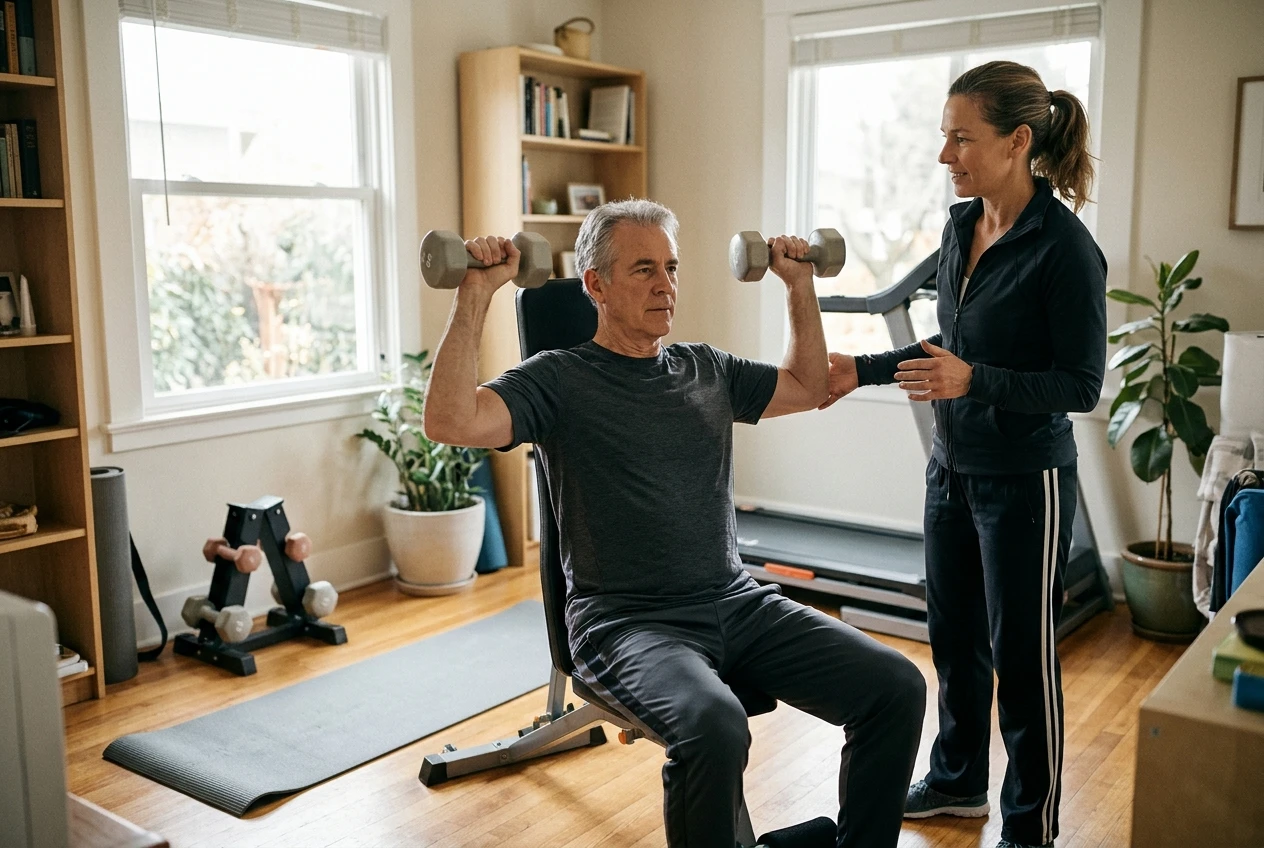
Technique before weight. Learn each movement with a light load until it feels smooth and controlled. A heavier weight lifted badly gives you less benefit and more risk than a lighter weight lifted well. If you can, ask a qualified trainer to check your form in the first sessions, or film yourself and compare with a reliable demonstration.
Machines or dumbbells. A barbell can feel awkward and intimidating at the start. Machines guide the movement for you, and dumbbells let each side work independently and are easy to adjust. Both are good ways to build strength, and you can stay with them for as long as you like. If you are setting up at home, my guide to the best home gym equipment for over 50s looks at joint-friendly options.
One or two reps in reserve. At first, end each set when you feel you could have done one or two more good reps. This keeps the effort hard enough to work without pushing you to failure while you are still learning the movements.
Add weight only when the last set feels controlled. If your final set is smooth, with good form and steady breathing, you can add a small amount of weight next time. If it is a struggle, stay where you are. Progress that is steady and repeatable beats progress that ends in injury.
Warm up. A few minutes of easy movement and a lighter first set of each exercise prepare your joints and muscles for the heavier work.
What to expect in the first weeks, and when to talk to your doctor
In the first weeks you will probably feel some muscle soreness, especially a day or two after a session. This is normal and usually eases as your body adjusts. Sharp pain, pain in a joint, or pain that gets worse as you move is a signal to stop and get it checked.
Some people notice better sleep or a lift in mood early on. Others take longer, and that is also normal. Strength gains, such as handling heavier weights or finishing sets more easily, tend to show up before changes in how you feel. Keep turning up and keep recording sessions.
Talk to your doctor before you begin if you have a heart condition, high blood pressure, diabetes, joint problems, osteoporosis, are recovering from surgery, or have not exercised for a long time and have any health concerns. It is also sensible to check in if you take medication that affects your heart rate or blood pressure.
Please also speak to a doctor or a mental health professional if low mood, anxiety or memory problems are severe, last for weeks, or interfere with daily life. If you ever have thoughts of harming yourself, contact your local emergency services or a crisis line straight away. Exercise can be a strong support alongside treatment, but it does not replace it. Memory changes that worry you or the people around you also deserve a proper medical assessment rather than waiting to see if training fixes them.
If you want to understand the physical side of what you are building, my posts on the benefits of weightlifting cover muscle, strength and body composition, which this article has deliberately left aside.
Ready to try it? Follow the 3-day, 30-minute plan in ‘How To Build Muscle After 50: The 3-Day, 30-Minute Plan‘ and give it a proper run before you change anything.