
If you search for the best strength training program for over 50, you will find strong opinions on PHAT, 5×5 and full-body routines, and most of them come from people who never mention what your week looks like. A program only works if you can run it for months. That depends on how many days you can train, how well you recover, how your joints respond to heavy loads and how much time you can spend in the gym.
I have been overweight and unfit, and I have learned how to diet and exercise my way out of it. This article does not crown a winner. It sorts the three programs by the limits of a real week after 50, then gives you a simple way to choose and a rule for when to change.
Why the best program is the one you can keep doing at 50 plus
Muscle responds to hard sets done regularly over a long time. A program that looks perfect on paper does nothing if you drop it in week three because it needs five days and your week gives you three. The gap between a good plan and a great one is small. The gap between a plan you follow and one you abandon is enormous.
After 50 there are a few extra constraints. Recovery between hard sessions often takes longer than it did at 30. Joints that have years of wear may object to certain lifts, and an old injury can rule out a movement entirely. Sleep, stress and work shifts also vary more than any program assumes.
So the useful question is “which of these can I do consistently for the next six months?” Each of the three programs below answers that differently.
If you have a heart condition, ongoing joint pain or a recent injury, speak to your doctor or a physiotherapist before starting any of them.
Full-body routines: the low-pressure way to start and stay consistent
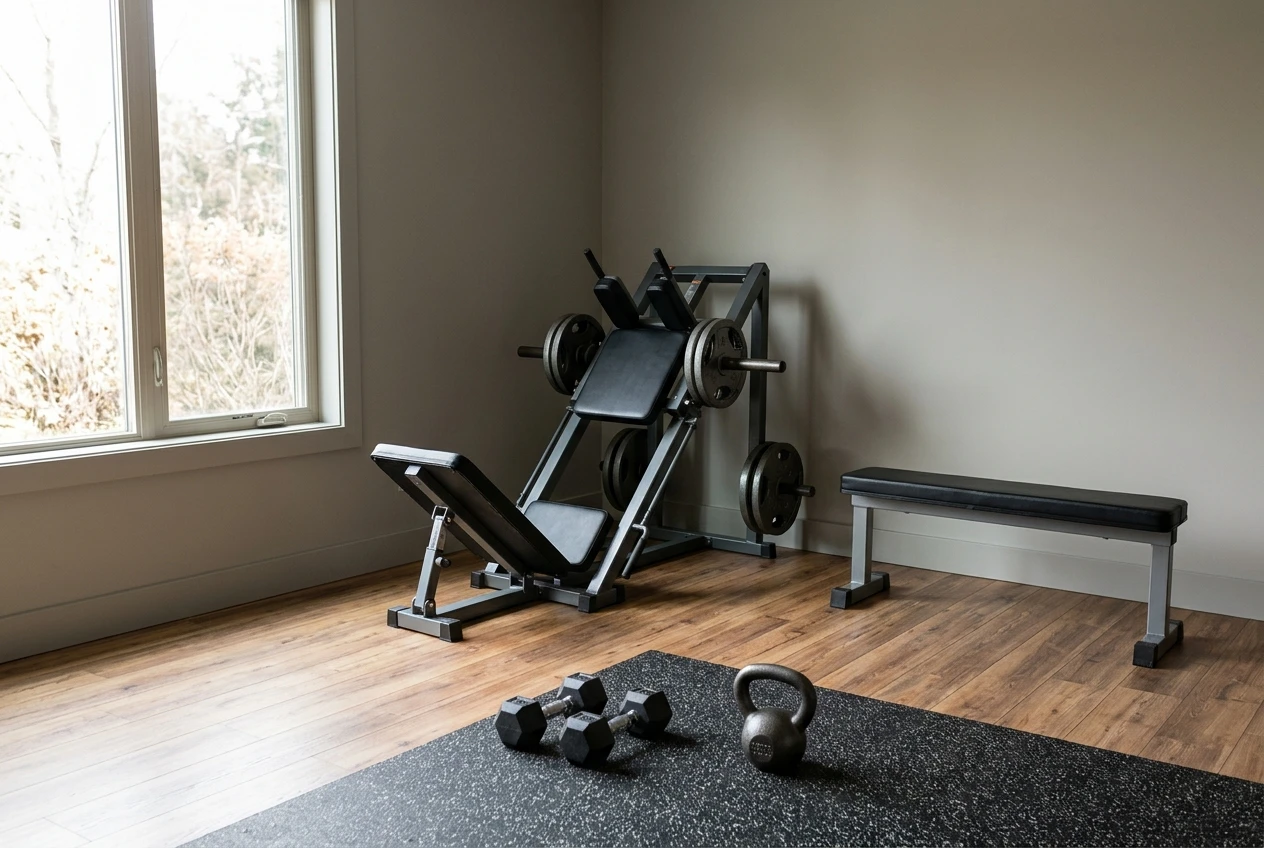
A full-body routine trains every major muscle group in each session, usually two or three times a week. A typical session might include a squat or leg press, a push, a pull, a hinge such as a Romanian deadlift, and some core work. Each muscle gets trained several times a week, but you never train the same one on consecutive days.
This suits the over 50s week well, for three reasons.
- Flexible scheduling. If you miss a session, the next one still covers everything. Nothing is left untrained because a Thursday got away from you.
- Built-in recovery. Training on alternate days gives each muscle roughly 48 hours between sessions, which is comfortable for most people returning to lifting.
- Easy on joints. You can choose machines, dumbbells, cables or bodyweight variations. If a barbell back squat bothers your knees or lower back, a leg press or goblet squat does the same job.
The weakness is that full-body sessions get long if you try to fit too much in. Keep each one to a handful of exercises and a few hard sets per movement. Progress comes from adding a little weight or a rep over time, not from adding more exercises.
For a returning beginner, this is where I would point almost everyone first.
5×5: simple, heavy and barbell-based, and who it suits
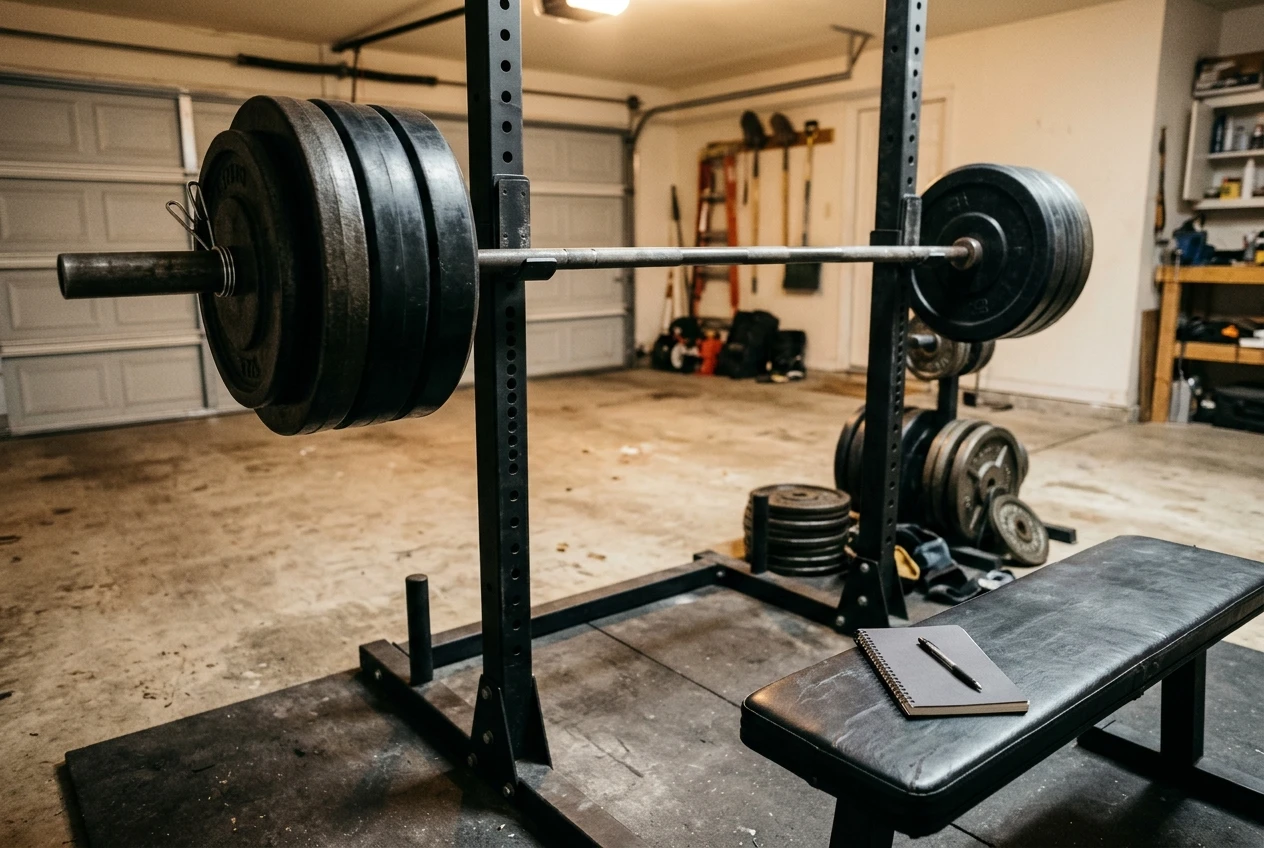
The 5×5 approach has you do five sets of five repetitions on a small number of compound lifts. The usual setup alternates two workouts, three days a week. Workout A is squat, bench press and barbell row. Workout B is squat, overhead press and deadlift. You add a small amount of weight when you finish all your sets.
Its strength is simplicity. There are few exercises, a clear target and a number on the bar that tells you whether you are progressing. People who like measuring progress often stay with it because the feedback is so obvious.
It also asks a lot of you:
- Barbell skill. The squat, press and deadlift need good technique. Without a coach, a mirror or a video of yourself, mistakes build up under heavy loads.
- Equipment. You need a rack, a barbell, plates and a bench, either at home or in a gym.
- Joint tolerance. Heavy overhead pressing can irritate shoulders, and heavy deadlifts and squats load the lower back and hips. If those areas are healthy, this is fine. If they are not, 5×5 will find the problem quickly.
- Recovery. When the weights climb, five sets of five on the squat three times a week gets demanding. Many people over 50 stall earlier than they did when younger, and that is normal.
5×5 suits someone who already has some lifting experience, or a beginner willing to learn the lifts properly, with healthy joints and a firm three days a week. If you try it, start lighter than your ego wants. Progress slowly and stop adding weight when form slips.
PHAT: power and hypertrophy for people with the time and recovery
PHAT stands for Power Hypertrophy Adaptive Training, a program popularised by Layne Norton. It runs five days a week. Two days are heavy power sessions, one upper body and one lower. The other three are higher-repetition hypertrophy days that focus on muscle size, covering back and shoulders, legs, and chest and arms.
For the right person it is a good program. It combines heavy work for strength with higher-volume work for muscle growth, and it hits each muscle group more than once a week. If you have lifted for years and want a challenge, it offers plenty to chase.
The costs are time and recovery. You need five training days a week, and the sessions are long because of the number of exercises and sets. Over 50, the volume is the real issue. Recovery depends on sleep, protein intake, stress and how hard your job is on your body. If any of those are shaky, five days of high-volume training can leave you tired, sore and stalled.

PHAT suits someone with an experienced training background, a flexible schedule, good sleep and no persistent joint trouble. It is a poor first program for most returning beginners. It also does not forgive a chaotic week, because five fixed days leave little room for a missed one.
If recovery is the part you are unsure about, my guide to how to recover after 50 covers sleep, protein and rest days in detail.
Side by side: days per week, session length, joint demands and recovery needs
The table below shows typical setups. Your own version may differ, and sessions get shorter or longer depending on how long you rest between sets.
Full-body 5×5 PHAT Days per week 2 to 3 3 5 Typical session length Short to moderate Moderate Longest of the three Joint demands Low to moderate, easy to adjust Moderate to high, heavy barbell lifts Moderate to high, with high volume Recovery needs Moderate Moderate to high as weights climb High Equipment Flexible: machines, dumbbells, bands Barbell, rack, bench, plates Full gym access works best Best for Beginners, busy weeks, cautious joints Lifters who want simple heavy progress Experienced lifters with time and recovery Main risk Sessions bloating Poor technique, stalling Overreaching, missed days
Two things stand out. The three programs differ mostly in how much they demand of your week, and less in how well they build muscle. And the program with the highest ceiling is also the one with the least slack if life interferes.
Match the program to your week: three honest questions to ask yourself
Answer these without picturing your best week. Think of an average one, including the weeks with appointments, poor sleep or visitors.

1. How many days can I train, including the bad weeks? If the answer is two or three, choose a full-body routine or 5×5. If you can truly protect five days, PHAT is possible, though it does not have to be your starting point. Count the days you would actually turn up, not the days you hope for.
2. How do I feel two days after a hard session? If you are still sore, stiff or tired, you need more recovery, and a full-body routine with a day between sessions is the safer choice. If you feel fresh and ready by the next session, you can handle heavier or more frequent work.
3. What do my joints say about heavy barbell lifts? If your shoulders, knees or lower back complain about heavy squats, presses or deadlifts, avoid 5×5 for now. Choose a full-body routine built on machines and dumbbells, where you can swap any movement that hurts. If your joints feel fine and you are willing to learn proper technique, 5×5 is an option.
Time in the gym matters too. If you have only a short window a few times a week, a compact full-body session is hard to beat. A program you do for 40 minutes three times a week beats one you plan for 90 minutes and skip.
What I would do if I were starting again, and when to move up or switch
I recommend, and do myself, three short, intense workouts per week. Each one trains the whole body with a small number of exercises, and the sets are hard. Short sessions are easy to fit into a week, they leave enough recovery between sessions, and they are easy to repeat. If you want a worked example of that approach, my 3-day, 30-minute plan lays it out.
If I were starting again from being overweight and unfit, I would begin with a full-body routine on three non-consecutive days and focus on technique before weight. I would use machines or dumbbells where a barbell felt awkward, keep one or two reps in reserve at first, and add weight only when the last set felt controlled. Then I would give it a proper run before changing anything.
A simple rule for when to switch
Stay with a program for at least eight to twelve weeks. Switching every few weeks means you never get to see whether it works.
After that, consider changing in these situations:
- You have stalled. If you cannot add weight or reps on your main lifts for three or four sessions in a row, and your sleep and protein are in order, the program has run its course for now.
- Your week has changed. More free days means you could move up to a split. Fewer means moving down to a shorter full-body routine, which is a sensible adjustment and not a failure.
- You are ready for heavier barbell work. If your technique is solid and your joints are happy, you can try 5×5 for a block.
- You have the time and recovery for more volume. Only then is PHAT worth trying, and you can drop back if you find yourself dragging.
- Something hurts. Joint pain that persists is a reason to change the exercise or the program immediately.
Whichever you pick, protein and sleep decide how much of the training you get back as muscle. My comparison of protein powder and whole food is a good place to sort the food side.
Once you have chosen, set up your space to match it. My guide to the best home gym equipment for over 50s covers joint-friendly kit for each approach, so you buy only what your program needs.