

Protein gets simple at thirty. Eat enough of it, lift heavy enough, and muscle shows up. Past fifty, the equation gets a third variable that nobody warns you about: your body stops responding to protein the way it used to, no matter how much you eat.
This is called anabolic resistance, and it is the real reason the “protein powder vs whole food” debate matters more now than it ever did before. At thirty, your muscles were primed to use whatever protein arrived. At fifty-plus, they need a bigger, faster dose of amino acids just to get the same response. That changes which protein source actually works best for you, and it is worth working through properly rather than guessing.
Why this question matters more after 50 than it did at 30
Muscle protein synthesis, the process your body uses to repair and build muscle tissue after training, becomes less efficient with age. Studies on older adults consistently show that the same amount of protein that triggers a strong muscle-building response in a thirty-year-old produces a blunted response in someone over fifty. Your muscles have effectively raised the bar for what counts as “enough.”
This is on top of two other things working against you: appetite naturally drops with age, and many people over fifty are eating less overall, often while also trying to lose fat. That combination, a higher protein requirement meeting a lower appetite, is why the source of your protein starts to matter as much as the amount.
If you are already following a structured plan, the protein question sits right alongside it. It is worth reading alongside How To Build Muscle After 50: The 3-Day, 30-Minute Plan if you want to see how protein timing fits around actual training days.
How protein builds muscle: the leucine threshold and muscle protein synthesis explained simply
Muscle protein synthesis is triggered by amino acids reaching your bloodstream, but one amino acid in particular acts as the switch: leucine. Think of leucine as the key that starts the engine. Until you hit a certain amount of it in a meal, roughly 2.5 to 3 grams for most older adults, the muscle-building machinery barely turns over, no matter how much total protein you ate.
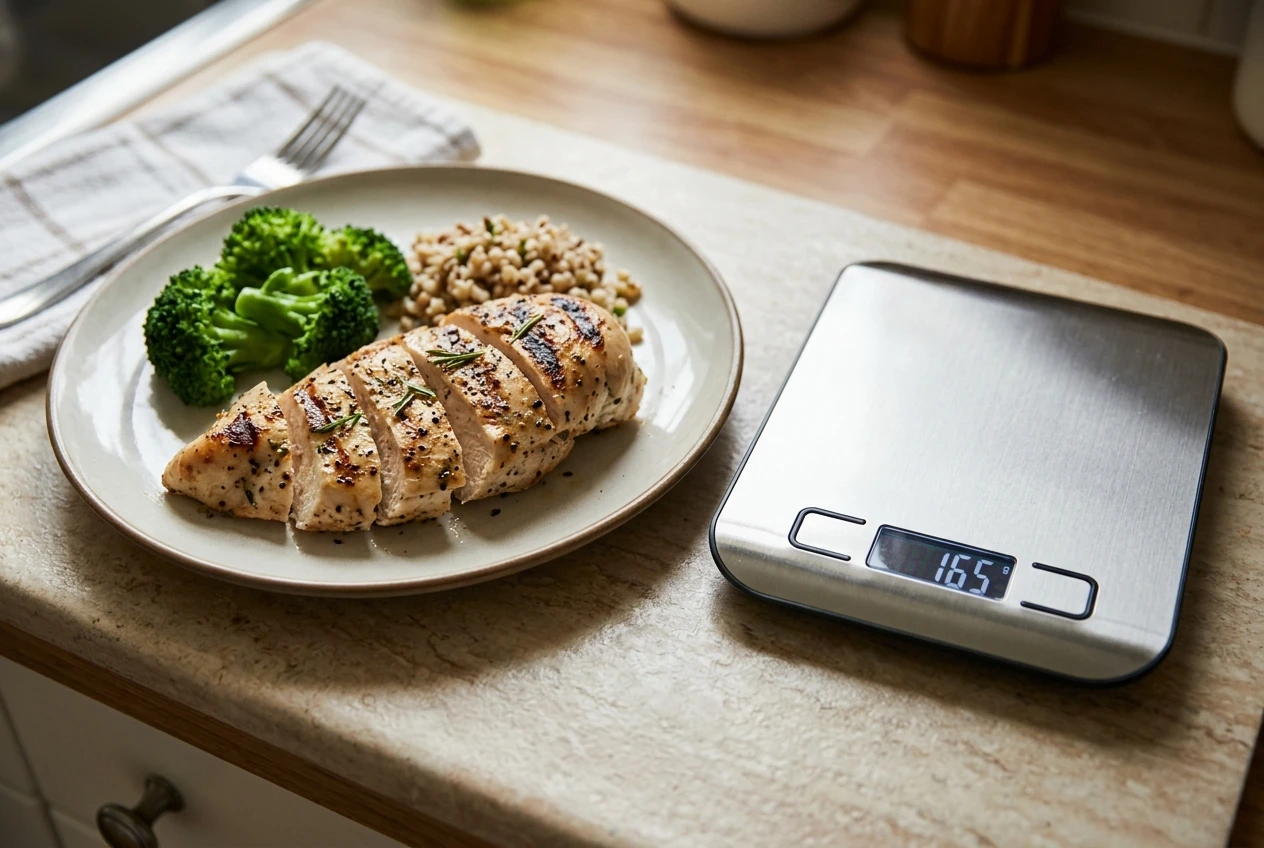
This threshold is higher after fifty than it is at thirty, which is the core of anabolic resistance. A twenty-five-gram serving of protein that reliably triggers a strong response in a younger lifter might only produce a partial response in someone over fifty. Most research on older adults points to needing somewhere around thirty to forty grams of high-quality protein per meal to reliably clear that threshold and get a full muscle-building signal.
This matters for the whole-food-versus-powder question because it is not just about total protein for the day. It is about whether each individual meal delivers enough leucine, fast enough, to flip the switch. That is where the two sources start to genuinely differ.
Whole food protein: what you gain beyond the protein itself
A chicken breast, a tin of salmon, a serving of Greek yoghurt, or eggs on toast do not just deliver amino acids. They arrive with a package of other nutrients that matter a great deal after fifty: zinc and B12 from meat and fish, omega-3 fats from oily fish, calcium and probiotics from dairy, and creatine naturally present in meat and fish, which has its own muscle and even cognitive benefits.

Whole food also triggers satiety signals that a shake does not. Chewing, stomach stretch, and the slower digestion of a mixed meal all tell your brain you have eaten, which matters when appetite is already working against you in one direction, you want to feel satisfied, but you also need to hit your target without feeling stuffed before you have eaten enough.
The downside is speed and density. A 30-gram serving of protein from whole food often comes bundled with fat, fibre, and volume that takes real digestive effort and time to break down. For someone with a smaller appetite, getting three or four meals a day to each hit thirty-plus grams of protein from food alone is a genuine challenge, and it is the single biggest reason this debate exists at all.
Protein powder: what it’s actually good at (and where it falls short)
Protein powder, particularly whey, is digested and absorbed faster than almost any whole food source. It delivers a concentrated leucine dose with very little volume and almost no fat or fibre to slow things down. For someone trying to hit that thirty-to-forty-gram threshold without eating a full meal, a shake does the job quickly and without much strain on appetite or digestion.

This speed is also protein powder’s main limitation. It is, by design, a stripped-down delivery mechanism. You are not getting the zinc, the B12, the healthy fats, or the slower, more satisfying fullness that a whole meal provides. Relying on it too heavily can mean technically hitting your protein number while quietly under-eating everything else your body needs.
Price is the other practical factor. A tub of whey protein typically works out cheaper per gram of protein than meat or fish, which matters if budget is part of why whole food alone feels hard to manage. It will not outperform food on nutritional completeness, but as a tool for closing a specific, measurable gap, it is hard to beat for convenience and cost per gram.
Digestion, appetite and gut comfort: the over-50s wrinkle most comparisons ignore
Most protein comparisons stop at grams and leucine content. For an over-50s audience, gut comfort deserves equal billing, because digestive function genuinely changes with age. Stomach acid production tends to decline, gut motility can slow, and lactose intolerance becomes more common, all of which affect how well you tolerate large servings of either protein source.

A big steak or a heavy protein shake eaten too close to bedtime can sit uncomfortably for someone whose digestion has slowed down. Whey-based powders, in particular, can cause bloating or loose stools in anyone with even mild lactose sensitivity, which becomes more common with age. If that sounds familiar, a whey isolate (which has had most of the lactose removed) or a plant-based powder is usually better tolerated than a cheaper whey concentrate.
Whole food has its own version of this problem. Large, fatty, or fibre-heavy meals eaten late in the day can disrupt sleep and leave you feeling sluggish the next morning, which matters for recovery and training consistency. If you want to understand how digestion ties into all of this more broadly, The Benefits Of Good Gut Health covers the groundwork.
The practical takeaway: whichever source you use, smaller and more frequent servings tend to sit better than one or two enormous protein hits a day, especially as digestion slows with age.
So which wins? A practical verdict based on your daily protein gap
Neither source wins outright, because the real question is not “which is better” but “what is your actual protein gap, and what is realistically going to close it.” Most over-50s lifters should be aiming for somewhere between 1.2 and 1.6 grams of protein per kilogram of body weight daily, spread across three to four meals that each clear that 30-to-40-gram leucine threshold.
If you can comfortably eat three solid protein-rich meals a day, whole food alone can get you there, and it will do so with a nutritional bonus that powder cannot match. If your appetite is smaller, your schedule is tight, or you are finding it hard to hit thirty grams at breakfast without feeling overfull before you’ve even started the day, a protein powder is the more realistic tool, not because it is biologically superior, but because it is the version of “enough protein” you will actually stick to.
This is really a math problem dressed up as a nutrition debate. Work out your gap first. If you are eating roughly 70 to 80 grams of whole-food protein a day against a target of 110 to 130 grams, a single scoop of powder closes that gap in one shake, with far less effort than trying to force down another chicken breast you don’t have an appetite for.
Building a hybrid approach that fits your meals, your budget and your gut
The most sustainable approach for most people over fifty is not whole food or powder, it is whole food as the base with powder used deliberately to plug specific gaps. Build your main meals around whole protein sources, aiming for one clear 30-to-40-gram hit at breakfast, lunch and dinner, and keep a protein powder on hand for the moments that whole food struggles to cover: right after a training session when appetite is low, a mid-afternoon gap when you’re short for the day, or a quick top-up before bed if you’re under your target.
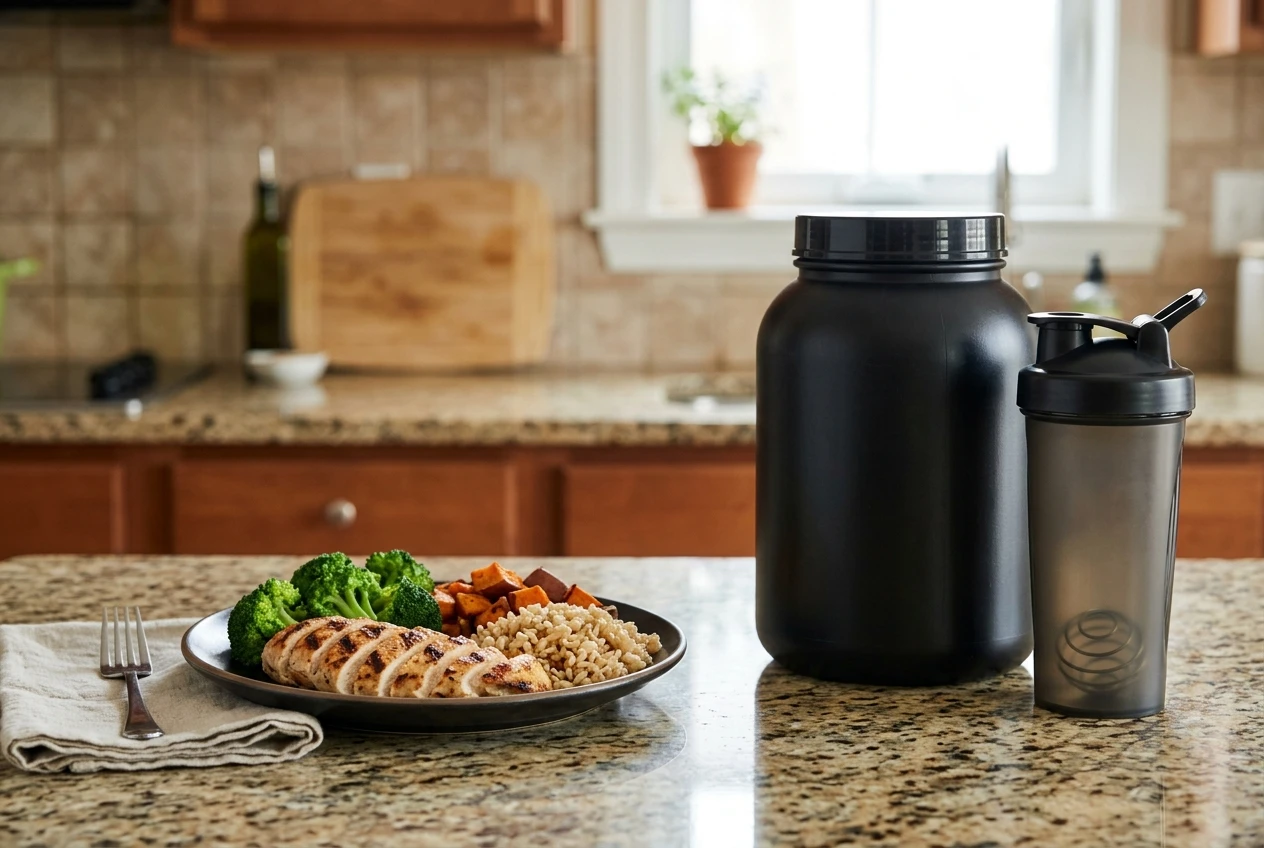
This also solves the budget concern without sacrificing the nutritional completeness of food. You are not buying powder to replace meals, you are buying it to replace the extra chicken breast or protein bar you would otherwise need to force down, which is usually both cheaper and easier to actually finish.
If the maths on your own day points toward needing a powder to close a real gap, it is worth choosing one that fits your gut and your goals rather than grabbing whatever is cheapest on the shelf, since the wrong formula can undo the convenience with bloating or discomfort. Look for a whey isolate or a well-reviewed plant-based blend with a clean ingredient list, check how it sits with you over a week before committing to a large tub, and treat it as one tool in a daily protein plan rather than the whole plan itself.