If you are over 50 and sore for days after a workout, the training is probably fine and the time between sessions needs more attention. This article covers how to recover faster after workouts over 50 using sleep, food, rest days, stress management and a few sensible tools. I came to all of this overweight and unfit, so I had to learn it from the beginning, and recovery was the part I most underestimated.
Why recovery takes longer after 50 (and why that’s not a reason to train less)
Several things slow down as we age. Muscle responds less strongly to the protein we eat and the exercise we do, a pattern researchers call anabolic resistance. Tendons and joints usually adapt more slowly than muscle does, so your muscles can feel ready for another session before the connective tissue around them is. Sleep also tends to get lighter and more broken, and that is when most repair happens.
The practical result is that the same session which left you sore for a day at 35 may leave you sore for two or three days now.
That is a reason to manage recovery better, and it does not mean you should train less. Strength training is one of the most useful things you can do at this age, for muscle, bones, blood sugar and mood. The adjustment is to give each session enough time and resources to pay off. Two or three strength sessions a week, with proper rest in between, will usually beat five sessions that leave you flat.
Soreness that peaks a day or two after training and fades by day three is normal, especially when you start a new exercise or return after a break. Pain that is sharp, localised in a joint, or still getting worse after several days is a different matter, and we will come back to it.
Sleep: the recovery habit that does the most work
If you can only fix one thing, fix sleep. Most adults do best on roughly 7 to 8 hours, and a regular wake-up time matters more than people expect. Going to bed and getting up at similar times each day makes sleep deeper and easier to come by.

These habits make the biggest difference for most people:
- Keep the bedroom cool, dark and quiet. A slightly cool room helps many people sleep more deeply.
- Set a caffeine cutoff. Caffeine stays in your system for hours, so finishing coffee by early afternoon is a good starting point.
- Go easy on alcohol in the evening. It may help you drop off, but it fragments sleep later in the night.
- Get daylight early. Ten to fifteen minutes outside in the morning helps set your body clock.
- Notice when you train. Some people sleep well after an evening session and others lie awake. Your own pattern is the guide.
If you snore heavily, wake gasping, or feel exhausted despite a full night in bed, speak to your doctor. Sleep apnoea is common in this age group and wrecks recovery until it is treated.
A short nap of around 20 minutes can help on a heavy training day, as long as it does not interfere with sleep that night.
Protein and food between sessions: what your muscles need to rebuild
Muscle is rebuilt from the protein you eat, and older muscle needs a bit more of it to get the same result. Research on older adults who train often points to somewhere around 1.2 to 1.6 grams of protein per kilogram of body weight per day. For an 80 kg person, that is roughly 96 to 128 grams a day. If you have kidney disease or any condition that affects your diet, check the right amount with your doctor first.
How you spread it out matters as well. Most people do better with a decent serving of protein at each meal than with a small breakfast and one large dinner. Aim for three or four meals that each include a clear protein source:

- Eggs, Greek yoghurt or cottage cheese at breakfast
- Fish, chicken, lean meat or tofu at lunch and dinner
- Beans and lentils alongside other protein foods
- A protein-rich snack such as yoghurt, milk or a handful of nuts with cheese
The idea of a tight “anabolic window” after a workout is overstated. Your total protein across the day matters most, and eating within a couple of hours of training is plenty. If you struggle to hit your target through meals, a protein powder can fill the gap. I compare it with whole food in protein powder vs whole food for muscle growth after 50.
Protein is not the only thing your body uses. Eating too little overall, which is easy to do when you are trying to lose weight, slows recovery noticeably. If you are dieting while lifting, keep the calorie deficit modest. Carbohydrates refill the energy your muscles use in training, so there is no need to cut them out. Drink enough water through the day, since even mild dehydration can leave you feeling flat and headachy.
Rest days that aren’t wasted: walking, mobility and easy movement
A rest day does not have to mean sitting still. Gentle movement increases blood flow, keeps joints from stiffening, and often makes soreness feel better. The test is simple: you should finish an active rest day feeling looser and more energetic than when you started.

Good options include:
- Walking for 20 to 40 minutes at a pace where you could hold a conversation
- Ten minutes of mobility work, such as hip circles, cat-cow, shoulder rolls and gentle hamstring and calf stretches
- Easy cycling or swimming, which are kind to the joints
- Light bouncing on a rebounder, which I cover below
What a rest day should not become is a second hard workout. A “light” session that leaves you out of breath and aching has defeated its purpose. If you feel like pushing, take that as a sign your recovery is going well, and save the energy for your next planned session.
It is also worth having one day a week with no structured exercise at all, apart from ordinary daily activity. Your body adapts during that time.
How to tell tired from overtrained: signs to back off
Feeling tired after hard training is normal and does not mean something is wrong. A pattern of worsening signs over a week or two does. Watch for these:
- Your resting heart rate is several beats higher than usual for a few mornings in a row
- Weights that felt manageable feel heavy, and your performance drops across consecutive sessions
- Your sleep gets worse even though you are exhausted
- You feel irritable, flat or unmotivated, and dread sessions you normally enjoy
- Your appetite drops or you catch every cold going around
- A joint or tendon ache that has lasted more than a few days and is getting worse
Ordinary muscle soreness feels like a dull ache spread through the muscle belly. Joint pain tends to be sharper, sits near a joint or tendon, and often hurts during the movement itself. Treat joint pain more seriously.
When you spot the warning signs, reduce the load before you stop completely. Cut the number of sets by about a third, drop one session for the week, or take an easier week with lighter weights. Many people benefit from a lighter week every four to eight weeks even when nothing feels wrong. Strength usually comes back quickly after a short deload.
Stop and get medical advice if you have chest pain, dizziness, unusual breathlessness, or severe muscle pain and swelling with very dark urine.
Stress, mood and recovery: the mental side of bouncing back
Your body does not separate gym stress from the rest of life. A difficult week at work, a worry about family or a run of bad nights all draw on the same recovery capacity as your training does. Stress and poor sleep also feed each other, which is why a stressful stretch can leave you sore and drained from sessions you normally handle.
Some low-effort habits help:
- Slow breathing for five minutes. Breathing in for four counts and out for six, in a quiet spot, settles most people.
- Time outdoors. A walk in a park or along a quiet road helps mood and lowers tension.
- Company. Training with a friend or chatting with a walking partner counts as recovery as well as exercise.
- A relaxed view of missed sessions. Skipping a workout in a rough week costs very little. Dragging yourself through it can cost more.
Exercise itself supports mood, so training is part of looking after your mental health as well as your body. If low mood or anxiety lasts more than a couple of weeks, or starts affecting daily life, talk to your doctor. That is a health issue to get support for, and training will not fix it on its own.
Recovery tools worth considering: foam rollers, rebounders, heart rate trackers and what to skip
Tools can help, but they come after sleep, food and rest days in importance. Here is how I would weigh them.
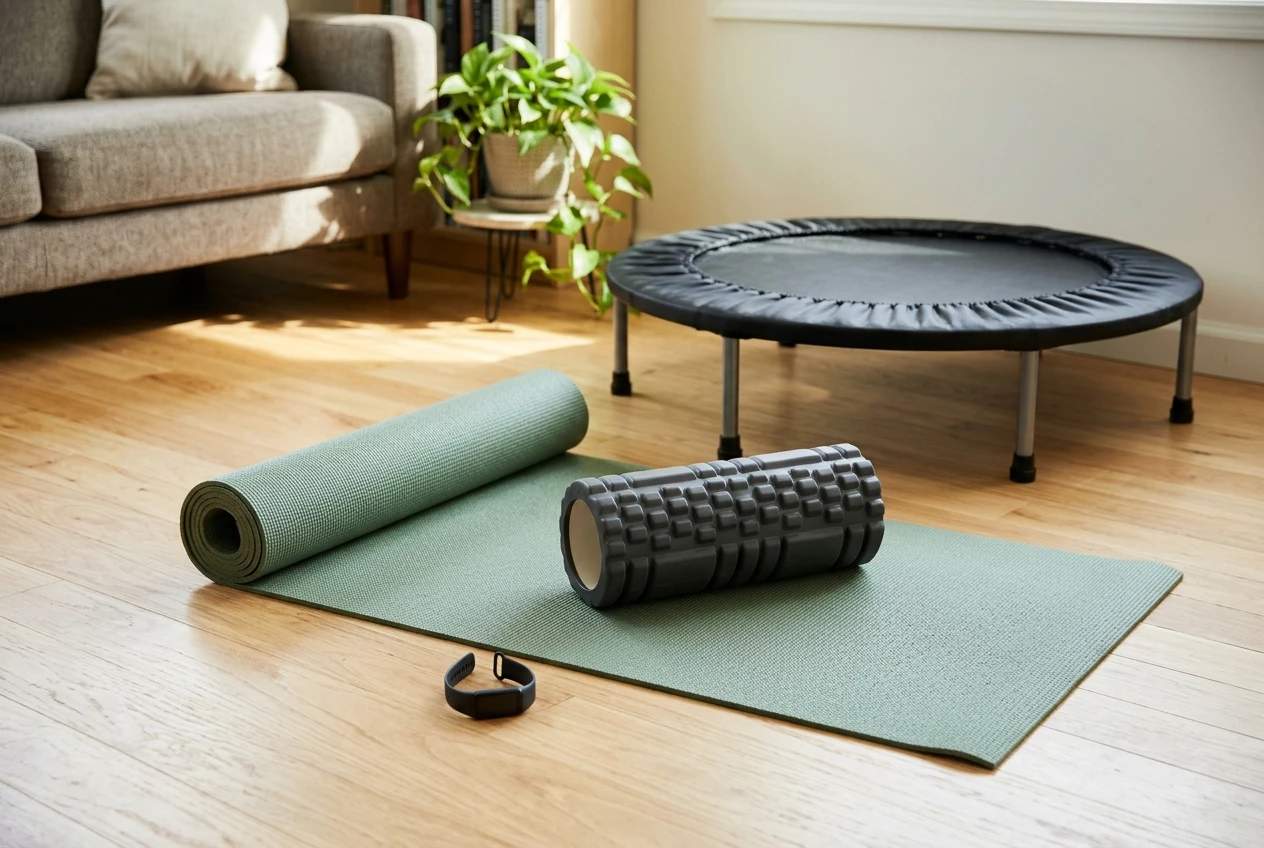
Foam roller. Cheap and simple. The evidence suggests it can make muscles feel looser and ease soreness a little, which is reason enough to own one if you enjoy using it. A basic, medium-firmness roller is all you need.
Heart rate tracker. This is useful for the “tired or overtrained” question. A tracker that shows your resting heart rate and sleep over time lets you spot trends, such as a resting rate creeping up before you feel run down. Ease of use matters more than features, because a device you find fiddly ends up in a drawer.
Rebounder. A small indoor trampoline gives gentle, low-impact movement that suits active rest days. Look for a stable frame and consider a stabiliser bar if your balance is not great. A few minutes of easy bouncing is plenty to start with.
What to skip. Expensive massage guns and elaborate gadget stacks promise a lot and add little beyond what a foam roller and a walk provide. Ice baths are worth a caution too, since some research suggests that cold immersion straight after strength training may blunt muscle gains. Recovery drinks and supplement bundles are usually sugar and marketing, and a normal meal with protein does the same job.
A simple weekly recovery routine you can copy
This sample week fits around three strength sessions. Adjust the days to suit your life.
- Monday: Strength session. Eat a protein-rich meal afterwards.
- Tuesday: Easy 30-minute walk and 10 minutes of mobility.
- Wednesday: Strength session.
- Thursday: Gentle rebounding or an easy walk, plus a few minutes of foam rolling.
- Friday: Strength session.
- Saturday: A longer, relaxed activity you enjoy, such as a country walk, a swim or a bike ride.
- Sunday: Full rest. Prepare protein-rich meals for the week.
Layer these daily habits on top of the week:
- A fixed wake-up time and a wind-down in the last half hour before bed
- Protein at every meal, and enough water through the day
- Five minutes of slow breathing, or a walk outside, on stressful days
- A quick check each morning: how did you sleep, how do your muscles and joints feel, and is your energy normal?
If two or three of those answers are poor on the same morning, swap the planned session for a walk and mobility. Every four to eight weeks, plan a lighter week. If you want the training side of this routine laid out, my 3-day, 30-minute muscle building plan for over 50s fits it well.
Recovery is what lets you keep turning up for years, and that consistency is what builds strength after 50. If you want gentle tools to use at home, start with my guide to the best heart rate fitness trackers for over 50s and my rebounder buying guide for over 50s, where I make my affiliate recommendations.