
Walk down the supplement aisle and you will find dozens of probiotic bottles, each claiming a different number of billions, a different set of Latin names and a different price. If you are over 50 and just want less bloating, more regular bowels or generally steadier digestion, picking one is harder than it should be.
This guide gives you a label-reading checklist first, then matches it to a shortlist for different goals. The best probiotic for over 50 is the one with the right strain for your goal, a dose that has been studied, and proof that what is on the label is in the capsule. Brand, price and packaging matter much less.
Why gut needs can change after 50 (and what a supplement can and can’t do)
Several things shift with age. Digestion tends to slow, so food spends longer in the bowel. Many people eat less fibre than they used to, or take medications that affect the gut, such as acid reducers, some diabetes drugs and antibiotics. Research generally finds that the gut bacteria of older adults are less varied than those of younger adults, though lifestyle explains a lot of that difference.
A probiotic can help with some of this. Particular strains have been studied for stool frequency, for bloating and for diarrhoea after antibiotics. The effects are usually modest, they depend on the strain, and they tend to stop when you stop taking it.
A probiotic will not fix a low-fibre diet, will not melt body fat and will not replace sleep, movement or protein. I was overweight and unfit myself before I learned to diet and exercise, so I am wary of any bottle sold as a shortcut. A good supplement is a small, useful add-on to habits that already work.
Before you buy: check with your doctor or pharmacist if you take medication or have a health condition
Probiotics are live organisms, and for most healthy adults they are well tolerated. For some people they are not a good idea, so a quick conversation first is sensible. Speak to your doctor or pharmacist before starting if any of these apply:
- You take immunosuppressant drugs or are having chemotherapy.
- You have a serious illness, a weakened immune system, or a central venous catheter.
- You have had recent abdominal surgery or have a condition such as pancreatitis or short bowel syndrome.
- You have persistent diarrhoea, blood in your stool, unexplained weight loss or ongoing pain. These need investigating, not a supplement.
- You take several medications and want to be sure nothing interacts.
If you are simply a generally healthy adult with a sluggish gut, the checklist below will do most of the work.
How to read a probiotic label: strains, CFU counts, expiry dates and proof of testing
Most of the marketing sits on the front of the bottle. The useful information is on the back, in the supplement facts panel. Check five things.
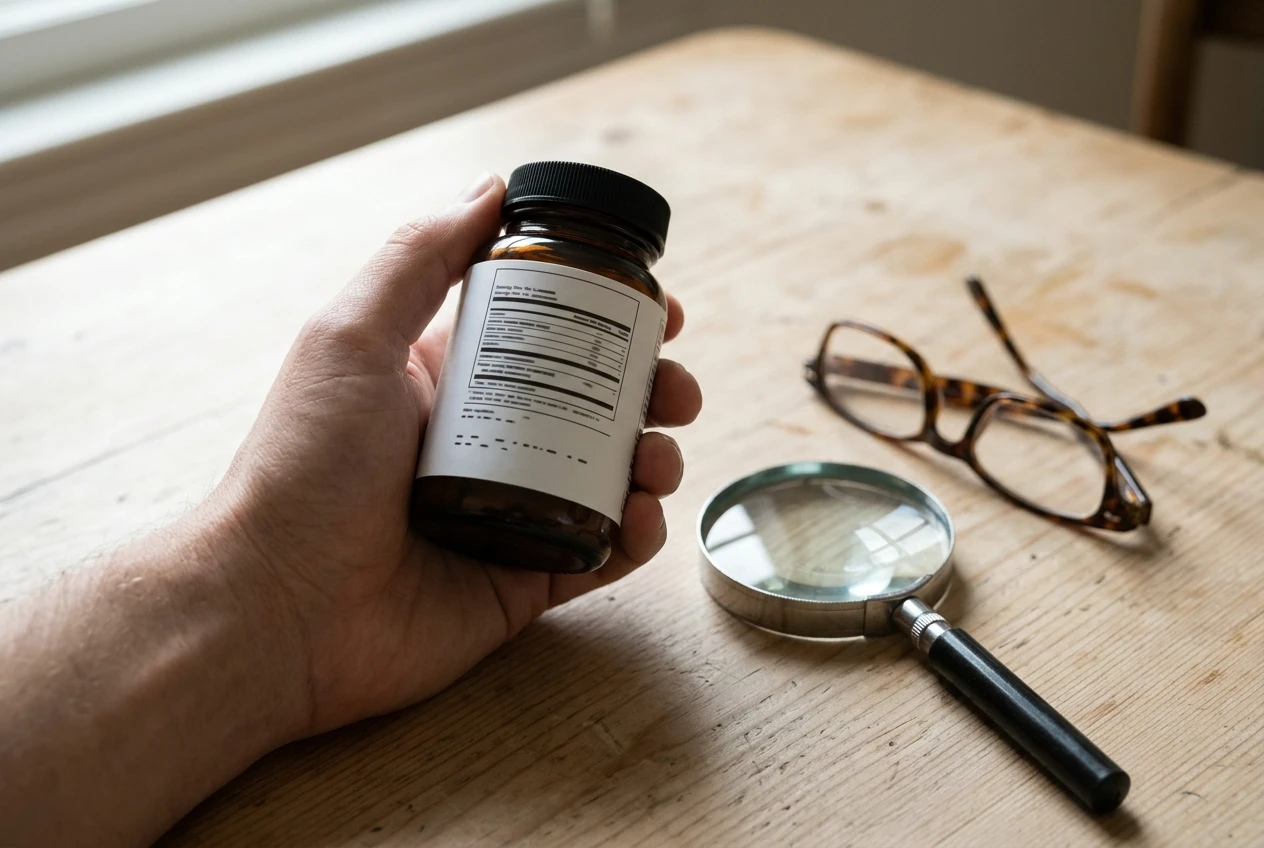
1. The strain, not just the species
A proper label gives three parts: genus, species and a strain code. For example, Bifidobacterium lactis HN019 is a specific strain. A label that only says “Lactobacillus acidophilus” tells you much less, because benefits found in studies belong to the tested strain, not the whole species.
If the label lists a blend of species with no strain codes, you cannot check whether any of it has been studied. That is the first thing I would walk away from.
2. The CFU count, and when it is measured
CFU means colony-forming units, the number of live organisms. Many studied doses fall somewhere between 1 billion and 10 billion CFU a day, so a bottle with 50 or 100 billion is not automatically better. A higher count can mean more gas in the early weeks.
The more important question is whether the count is guaranteed at the end of shelf life or only at the time of manufacture. “CFU at expiration” or “through the expiry date” is what you want to see. Counts at manufacture can drop considerably before the capsule reaches you.
3. Delivery and storage
Stomach acid kills some bacteria before they reach the bowel. Manufacturers deal with this in different ways: delayed-release or acid-resistant capsules, freeze-dried organisms in sealed blister packs, or naturally hardy species such as spore-forming Bacillus strains and the yeast Saccharomyces boulardii.
Read the storage instructions and follow them. Some products need refrigeration, and a bottle that has sat on a warm shelf for weeks is a weaker product. Shelf-stable products are more convenient, but only if the maker explains how the organisms survive.
4. Expiry date
Check the date before you buy. A product with only a few months left will have lost more of its live count, and you will not finish it in time to benefit from the rest.
5. Proof of testing
Supplements are not tested before sale in the way medicines are, so look for independent verification. Marks from organisations such as USP and NSF, or a listing with a testing service such as ConsumerLab, mean a third party has checked that the contents match the label. A manufacturer who publishes batch testing results is also a good sign.
Also scan the “other ingredients” for added sugar, artificial sweeteners and allergens such as dairy, soy or gluten if these affect you.
Which strains match which goal: regularity, bloating, immune support, mood
Research on probiotics is strain-specific, so match the strain to the job. These are the strains with the most relevant evidence for each goal, and none of them is a guarantee.
Regularity. Bifidobacterium lactis HN019 and B. lactis BB-12 have been studied for stool frequency and gut transit time, including in older adults. If constipation is your main issue, these are the names to look for.
Bloating and general digestive discomfort. Bifidobacterium longum 35624 and Lactobacillus plantarum 299v have been studied in people with irritable bowel symptoms, including bloating and abdominal discomfort. If your bloating is new, severe or constant, see your doctor before trying anything.
After antibiotics. Lactobacillus rhamnosus GG and Saccharomyces boulardii are among the most studied options for reducing the risk of diarrhoea linked to antibiotics.
Immune support. The evidence is modest. Some studies of strains such as L. rhamnosus GG and B. lactis BB-12 suggest fewer or shorter respiratory infections in certain groups, but results vary. Treat it as a possible small bonus, not a reason to buy.
Mood. The gut and brain communicate, and a few small trials have looked at strains such as Lactobacillus helveticus R0052 and Bifidobacterium longum R0175 for stress and low mood. This research is early. If you are struggling with your mental health, a probiotic should never replace professional support.
Our shortlist: the probiotic supplements we’d pick for over 50s, and who each suits
I have judged these against the checklist above: a named, studied strain, a reasonable dose, and a maker with a track record. Formulations change, so read the current label on the product you are looking at and run it through the five checks before you buy.
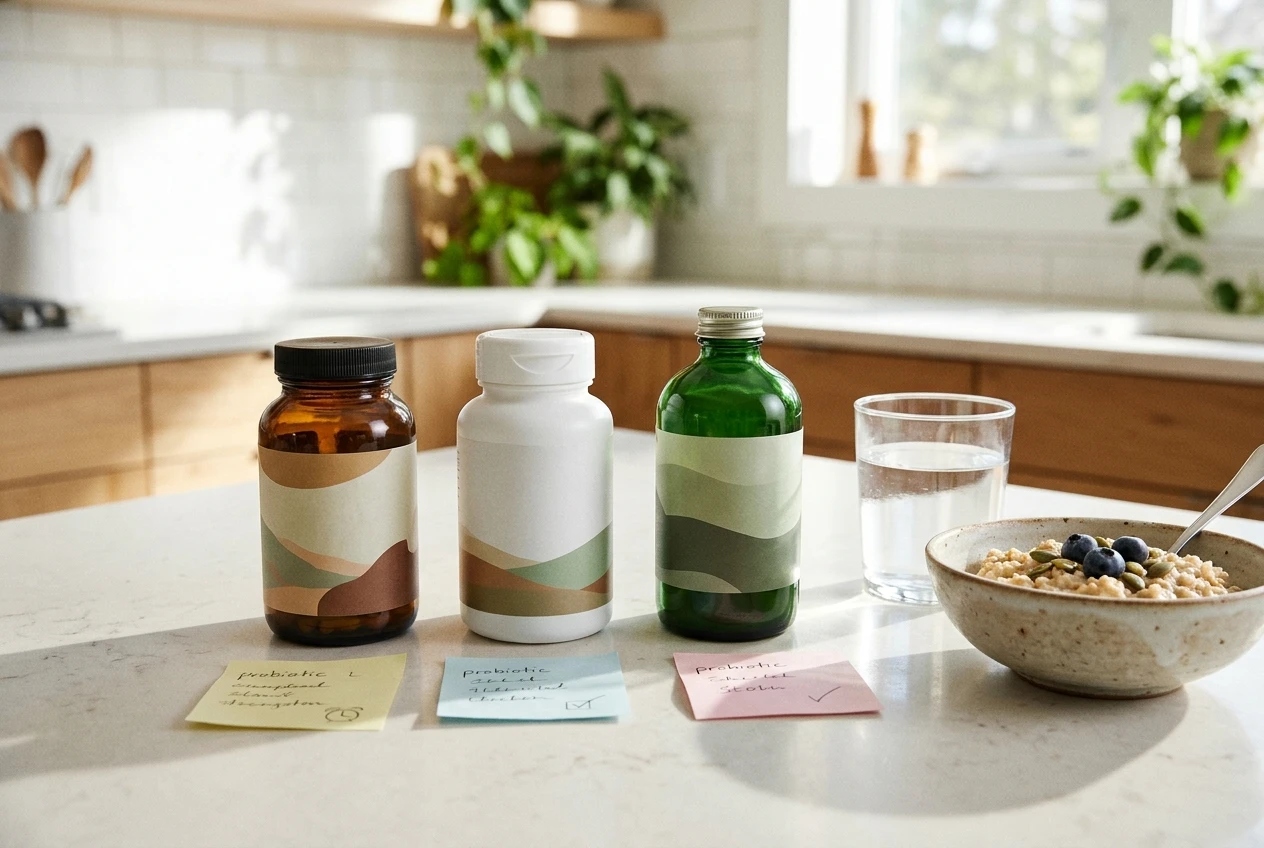
For bloating: Align (Bifidobacterium longum 35624)
Align is a single-strain product built around B. longum 35624, the strain studied for bloating and abdominal discomfort in people with irritable bowel symptoms. A single named strain makes it easy to judge. It suits someone whose main complaint is a swollen, uncomfortable stomach after meals, once a doctor has ruled out anything that needs treating.
For general gut support: Culturelle Digestive Health (Lactobacillus rhamnosus GG)
L. rhamnosus GG is one of the most researched probiotic strains. Culturelle is built around it, which makes it a reasonable all-round choice if you want a well-documented strain for everyday digestive support, or you are taking a course of antibiotics and want to lower the risk of an upset stomach. It is a simple, single-strain product, and for many people that is a point in its favour.
For antibiotic courses and a sensitive gut: Florastor (Saccharomyces boulardii)
S. boulardii is a yeast, not a bacterium, so antibiotics do not affect it. That is why it is commonly taken alongside them. It suits someone on a short antibiotic course who wants to protect against diarrhoea. Because it is a live yeast, it is one of the products where checking with your doctor first matters most if your immune system is compromised.
For regularity: any product listing B. lactis HN019 or BB-12 by strain code
Several brands carry these strains, so I would not point you to one bottle. Use the checklist: find a product that names the exact strain, gives the CFU count at expiry, states how to store it, and carries third-party testing. If a brand cannot show you those four things, choose another.
For mood: no single product earns a recommendation yet
The research is too early for me to pick a bottle and say it will lift your mood. Put your effort into sleep, movement, daylight and talking to someone, and treat a probiotic as an optional extra at most.
Food first or capsule first? Where yogurt and fermented foods fit
You do not have to choose, but food is the cheaper place to start. Live-culture yogurt, kefir, sauerkraut and kimchi provide live bacteria along with protein, fibre or other nutrients, and they cost less per serving than most capsules. The catch is that the strains and numbers vary from batch to batch, so you cannot target a specific goal as precisely as you can with a labelled capsule.

Check that the label says “live and active cultures”, because heat-treated products have had the bacteria killed off. Sauerkraut sold on a shelf in a jar is often pasteurised, while the refrigerated kind usually is not.
If you like the idea of making your own, my L. reuteri yogurt recipe for beginners walks through it step by step. For the background on that strain, see the health benefits of L. reuteri.
A reasonable approach is to build fermented foods and fibre into your meals, then add a capsule if you have a specific goal that food has not met after a few weeks.
How to take a probiotic and how long to give it before judging it
Follow the directions on the label, because timing and storage differ between products. A few habits apply broadly:
- Take it at the same time each day so you build a routine. Some products work best with a meal, others on an empty stomach, so check the instructions.
- If you are on antibiotics, take the probiotic a couple of hours apart from each dose.
- Start with one product only. If you start three things at once, you will not know which one helped or caused a problem.
- Expect some gas or looser stools in the first days. This usually settles. If it gets worse or does not go away, stop and speak to your pharmacist.
Give it about four weeks of daily use before judging. Probiotic effects build gradually, and a few days is too short to tell. Keep a simple note each day on stool regularity, bloating and comfort after meals, so you are judging from a record and not from memory.

If nothing has changed after four to six weeks, it is reasonable to stop or try a different strain. A different strain is a better move than a higher dose of the same one.
Red flags and overhyped claims to ignore
A few things on a label or sales page should make you cautious:
- Disease claims. Any probiotic that claims to cure, treat or reverse a condition is overstating the evidence.
- Huge CFU numbers as the main selling point. Fifty or a hundred billion sounds impressive, but the dose that matters is the one tested for your goal and strain.
- Proprietary blends with no strain codes. If you cannot see what is in it, you cannot check it.
- No expiry guarantee. A count measured only at manufacture tells you little about what you will swallow.
- No independent testing. A maker that is proud of its product will usually say who has verified it.
- Weight-loss promises. Some research looks at gut bacteria and body weight, but no probiotic capsule on the market will replace eating well and training. If weight is your goal, creating a sustainable weight loss plan will do far more for you than any bottle.
- Celebrity and influencer endorsements. These tell you who was paid, not what is in the capsule.
If a claim sounds too good, check it against the strain, the dose and the testing. Most inflated claims fail on at least one of the three.
Your next step
Pick the goal that matters most to you, whether that is regularity, bloating or general gut support, and run one product through the five label checks. Check the current price and latest reviews of the probiotic that matches your goal, using the shortlist above to know what to look up. Then read my guide to the benefits of good gut health to build the daily habits that make any supplement work better.