The best low impact cardio machines for joints are the recumbent bike for sore knees and lower backs, the upright bike for general fitness, and the elliptical for a walking-style motion with no impact. A rowing machine suits people with good technique and a healthy back. A walking treadmill suits hips that prefer to keep moving.
I have been overweight and unfit, so I know how off-putting it is to start cardio when your joints complain before your lungs do.
The good news is that you do not need to pound the pavement to look after your heart or lose weight. This guide matches each machine to the joint most likely to be bothering you, then shows where gentle cardio fits around three strength sessions a week.
Which Cardio Machines Are Easiest on Your Joints?
The recumbent bike and the elliptical put the least stress through your joints, with the upright bike close behind.
Joint stress comes in two forms: impact and load.
Impact is the jolt each time a foot hits the ground, which is what makes running hard on knees and hips.
Load is the pressure from bearing your body weight while your joints bend, which is why a deep squat can ache even though nothing is landing.
Seated machines such as bikes remove most of your body weight from the equation.
Standing machines such as the elliptical remove the landing jolt, but you still carry your weight.
Walking and rowing sit in between, and technique matters more on those.
None of this replaces medical advice, so see your GP or a physiotherapist first if you have persistent joint pain, a joint replacement or a diagnosed condition.
How Do You Choose by Joint: Knees, Hips or Lower Back?
Pick the machine that avoids the movement that hurts you most, then adjust the setup before you judge it.
- Sore knees: A bike with the saddle set high enough that your knee does not bend sharply at the top of the pedal stroke is usually the kindest choice, and the elliptical is a good second option.
- Sore hips: Deep hip bending bothers some hips, so favour an elliptical or walking, or a bike with a higher saddle so your thigh does not rise as far.
- Lower back pain: A recumbent bike gives you a backrest, and an elliptical keeps you upright without any forward folding.
- Aching everywhere: Start with the recumbent bike and keep the resistance light for a few weeks.
Your sore spot is not always your weak spot.
Back pain can come from tight hips, and knee pain can come from weak thighs, which is one reason a strength plan and cardio work well together.
If a movement causes sharp pain, stop, because a dull muscle ache is a different thing from a sharp joint pain.
Is a Recumbent Bike or an Upright Bike Better After 50?
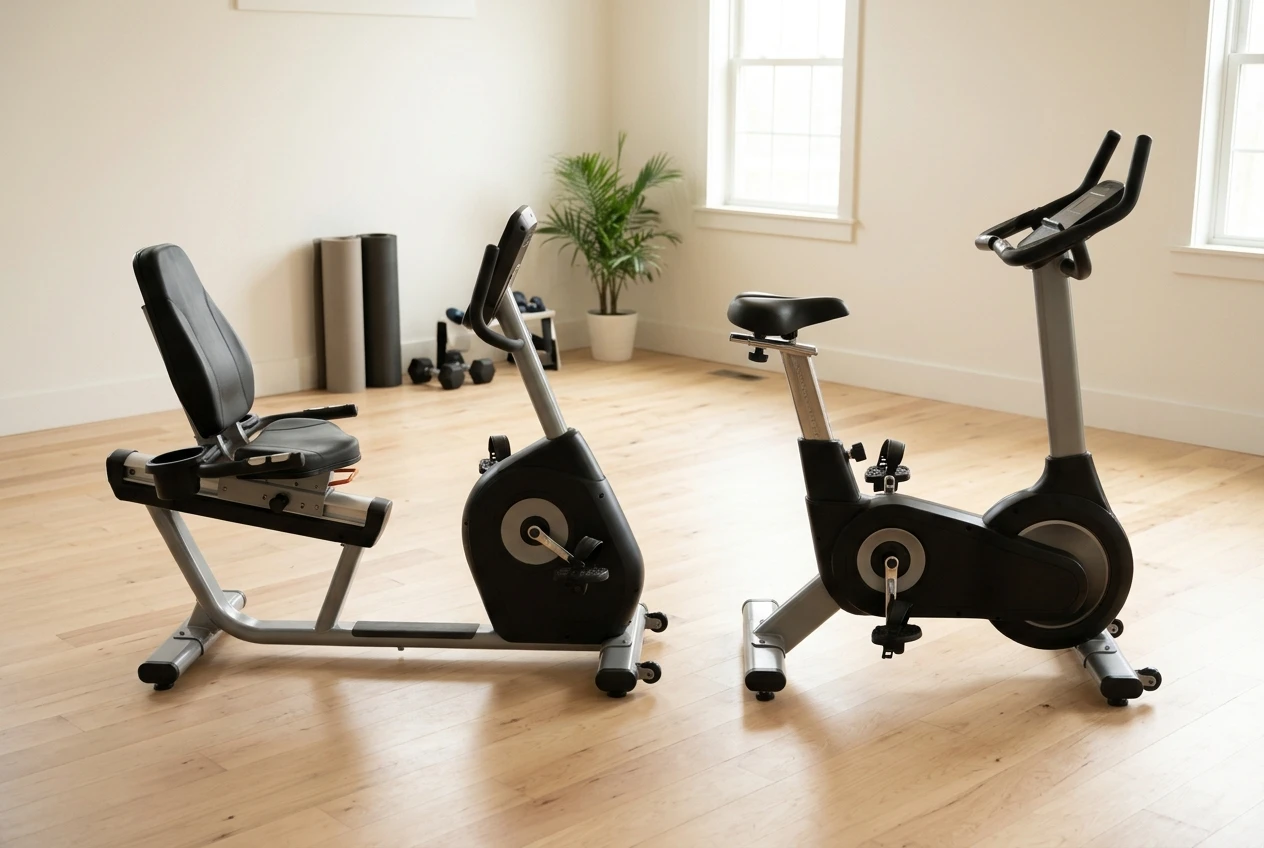
A recumbent bike is usually better if your lower back or hips are sore, and an upright bike is better if you want a little more muscle work and have no back complaints.
The Recumbent Bike
You sit back in a seat with a backrest, and your legs push forward.
That supports your spine and takes weight off your hips and knees.
It is also easy to get on and off, which matters if balance or stiffness is an issue.
The trade-off is that it feels less like “proper” exercise, so it is tempting to coast.
Raise the resistance until you can still talk in short sentences but would struggle to sing.
The Upright Bike
An upright bike works more like a road bike, and your core has to hold you up.
That gives you a bit more muscle involvement, and you get more of a sense of effort.
The narrow saddle bothers some people after a few minutes, and leaning forward can irritate a sore lower back.
Saddle height is the main thing to get right.
If your knees ache on an upright bike, the saddle is often too low, and raising it a little can help.
Is the Elliptical Kinder to Your Joints Than a Treadmill?
For most people it is, because your feet stay on the pedals and nothing lands, while a treadmill sends a small jolt through your joints with every step.
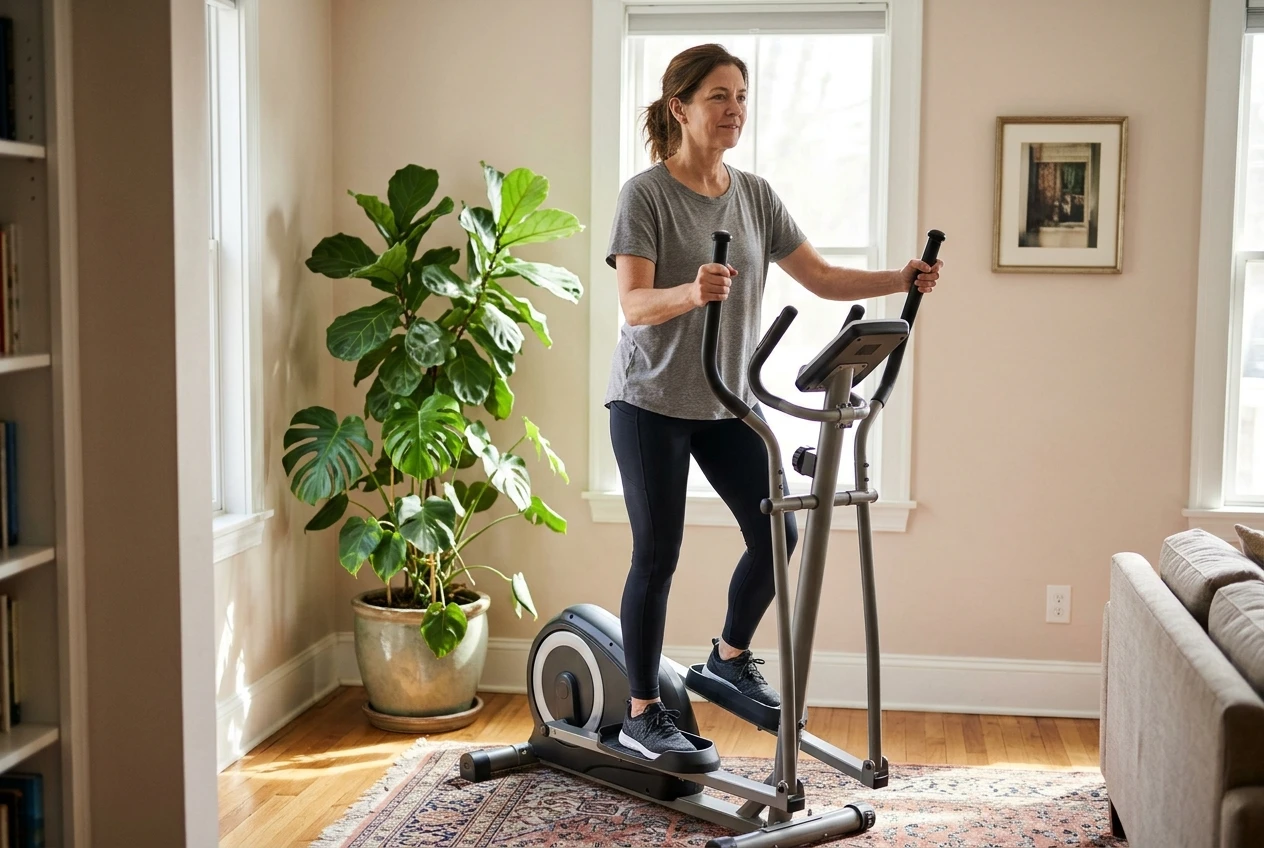
The elliptical also lets you use your arms, which raises your heart rate without adding impact.
It feels natural to anyone who likes walking and wants more of a workout.
A few things to watch:
- The fixed path of the pedals suits some knees and annoys others, so try a machine before you buy.
- Holding the handles too tightly turns the movement into an arm workout and takes work away from your legs.
- Leaning forward onto the handles can irritate a sore lower back, so stand tall.
A treadmill walked at a comfortable pace is still gentle for many people, and it is far kinder than running.
The elliptical simply removes the landing altogether, which is why I would try it first if your knees or hips flare up on pavement.
Can a Rowing Machine Work if You Have Joint Problems?
Yes, for many people with sore knees or hips, but it is the machine where technique matters most and the one I would approach most carefully with a bad back.
Rowing is low impact because your feet are strapped in and nothing lands.
It works your legs, back and arms in one movement, so it raises your heart rate quickly.
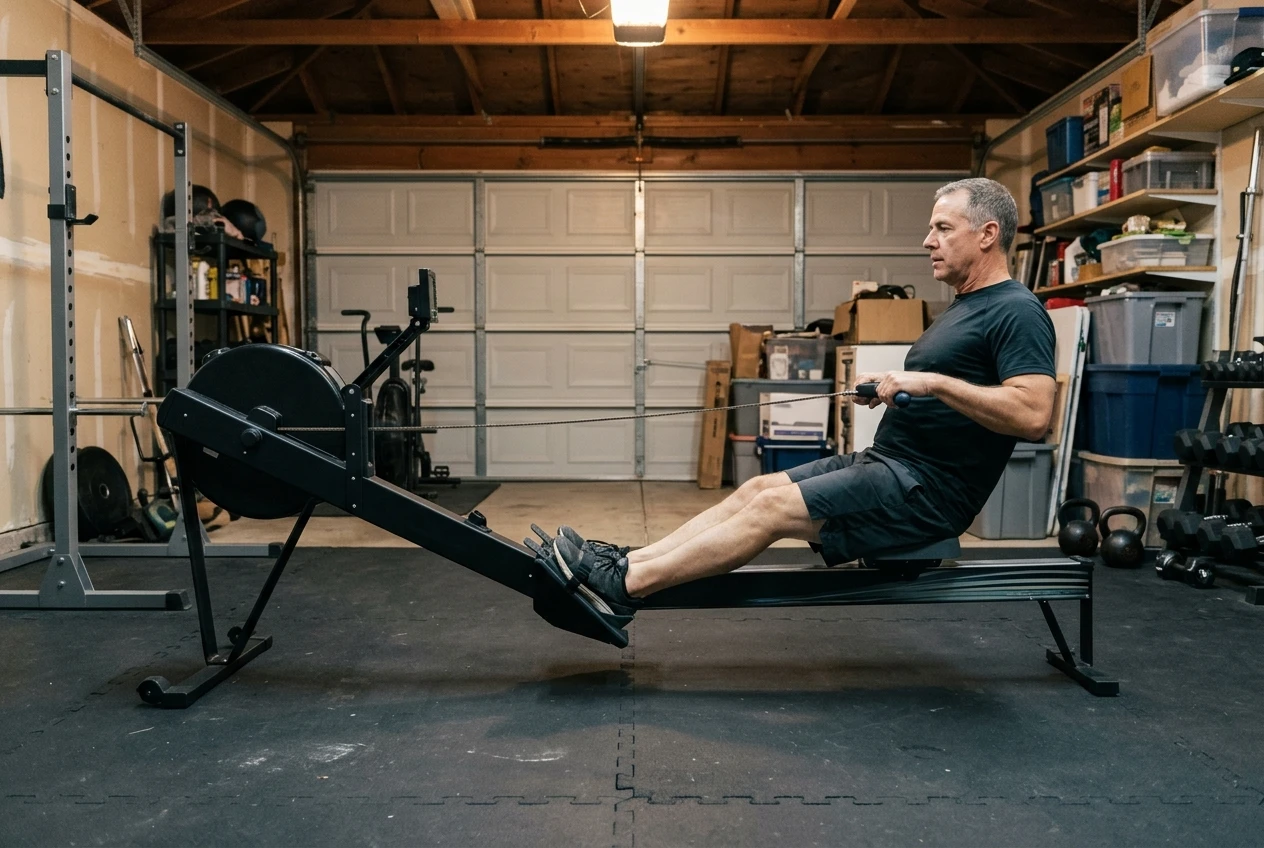
The catch is that it asks for deep knee and hip bending, and for a hip hinge that keeps your back neutral.
If you round your lower back to pull harder, you can aggravate it.
The order of a good stroke is:
- Push with your legs first.
- Lean back slightly from the hips.
- Pull the handle to your lower ribs.
- Return in reverse: arms, then body, then legs.
Start with ten minutes at an easy pace and set the resistance low, because you do not need a hard setting for good heart-rate work.
If you have a history of back problems, ask a physiotherapist whether rowing suits you before you buy one.
Rowing is also close to a gym movement, which links neatly to the technique-before-weight idea I use for strength work.
What About Walking Pads, Incline Walking and Rebounders?
Walking is the gentlest weight-bearing option, and a walking pad or treadmill lets you do it indoors at any time and in any weather.
A walking pad is a slim, low-speed treadmill, usually foldable and designed for walking rather than running.
It suits people who want to add steady movement to the day and do not want a bulky machine.
Incline walking raises your heart rate without extra speed, so you can work harder without a harder landing.
Steep inclines load the calves and can annoy some knees and Achilles tendons, so start with a gentle slope and add only a little at a time.
A fast walk on a flat treadmill is a fine place to begin if you are new to exercise.
A rebounder, or mini trampoline, is one more low-impact option because the springy surface absorbs much of the landing.
I cover it in its own section below, and I have buying guides if you want the detail.
Low-Impact Machines Compared at a Glance
This table shows who each machine tends to suit and what to watch for.
Machine | Best For | Watch Out For | Impact on Joints |
|---|---|---|---|
Recumbent bike | Sore lower back, hips or knees; beginners | Coasting at low resistance | Very low |
Upright bike | General fitness; no back pain | Saddle comfort; saddle set too low | Very low |
Elliptical | Sore knees; people who like walking | Leaning on the handles; the fixed path | Low |
Rowing machine | Strong backs with good technique | Rounding the lower back; deep bending | Low, but technique dependent |
Walking treadmill or pad | Hips and knees that like walking; easy daily movement | Steep incline; stiffness at first | Low to moderate |
Rebounder | Variety; short, fun sessions | Balance; the first few weeks | Low |
Prices change often and vary by retailer, so check the current price at the retailer you trust before you decide.
How Do You Fit Cardio Around a 3-Day Strength Plan?
Keep your three strength sessions on non-consecutive days and put easy cardio on the days between them, so cardio never competes with your recovery.
I build strength around three short, hard workouts a week: legs, then shoulders and back, then chest and arms.
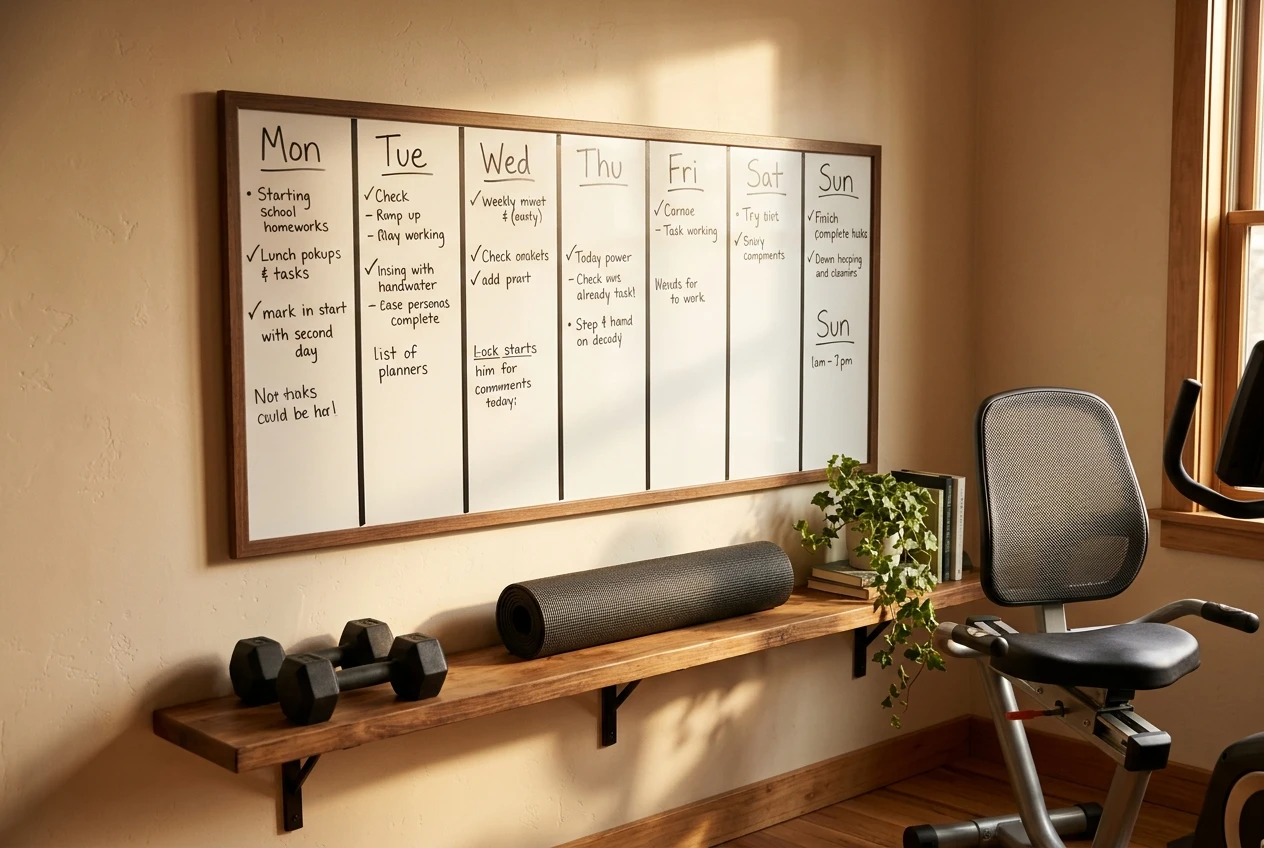
Leave a day between each so your muscles can repair.
For example:
- Monday: Legs
- Tuesday: Easy cardio, 20 to 30 minutes
- Wednesday: Shoulders and back
- Thursday: Rest, or a gentle walk
- Friday: Chest and arms
- Saturday: Easy cardio, 20 to 30 minutes
- Sunday: Rest
The cardio on your off days should stay easy, meaning you can hold a conversation throughout.
It should leave you feeling better, not flattened.
The strength workouts are the hard ones, and they are where the big gains for your muscles and bones come from.
A few rules keep the whole thing sustainable:
- Put technique before weight, and use machines or dumbbells if a barbell feels awkward.
- Keep one or two reps in reserve at first, which means stopping a set while you could still do a rep or two more.
- Add weight only when the last set feels controlled.
- Give the routine a proper run before you change it.
If your legs are sore after Monday, a light spin on a recumbent bike on Tuesday can feel good, and a hard interval session will not.
Cut cardio first if you are tired all the time, because sleep, protein and rest days do more for you than extra minutes on a machine, and my guide on how to recover after 50 covers those habits.
The 3-day, 30-minute plan is the worked example of the strength side, so you can see how short each session can be.
What Should You Check Before You Buy?
Check the fit, the space, the noise and the step-in height, because a machine you will not use does nothing for your joints.
- Try it first if you can. A showroom or gym trial tells you in five minutes whether an elliptical path or a saddle suits your body.
- Measure your space. Allow room to get on and off, and check whether it folds away if you live in a small place.
- Look at the step-in height. A low step-through frame is easier on stiff hips and knees.
- Check the adjustments. Saddle height, seat distance and resistance should all change easily and stay put.
- Check the weight limit. Make sure the stated limit covers your body weight with a comfortable margin.
- Consider noise. Some machines are quiet and some are loud, which matters in a flat or when others are asleep.
- Think about your habits. A machine that sits in view gets used more than one stored in a cupboard.
Read the return policy before you pay, since a machine that hurts after a fortnight should be easy to send back.
The cheapest machine is rarely the best value if it wobbles or the resistance feels rough.
Can a Rebounder Be the Best Low-Impact Exercise?
A rebounder can be a good low-impact option, especially for variety, but it is not automatically the best, and the right answer depends on your balance and joints.
The springy surface absorbs part of the landing, so many people find it gentler than hard ground.
Even gentle bouncing gets your heart rate up, and sessions can be short.
It asks more of your balance than a bike does, so choose a model with a stability bar if you feel unsteady.
If you want to compare types, my guide to the best rebounders for over 50s covers folding, solid, bungee and spring models.
For sore knees, hips or a bad back, a bike or an elliptical is a more predictable starting point.
A rebounder works well as a second option once you know how your joints respond.
Pick the one machine that suits your joints and your space, check the current price with the retailer you trust, and then read the 3-day, 30-minute plan to see where easy cardio fits around your three strength sessions.