What to eat after a workout over 50 is a meal with a palm-sized portion of protein, a fist-sized portion of carbohydrate such as potatoes, rice or oats, and some vegetables, eaten within a couple of hours of training. That meal helps your muscles repair after the session. It does not cancel the work you just did.
Do I Really Need to Eat After a Workout Over 50?
Yes, you need to eat after training, though it does not have to happen the minute you put the weights down.
Strength training gives your muscles a reason to repair and grow, and food supplies the material for that repair.
A normal meal within a couple of hours is a sensible target for most people.
Skipping food to “save calories” works against the reason you trained, because the session is the signal and the meal is the response.
I have been overweight and unfit, and I have learned to treat food as fuel rather than a punishment, so I know how tempting it is to go hungry after exercise.
If you have diabetes, kidney problems or any condition that affects how you eat, check the details with your doctor or dietitian first.
How Much Protein Should I Have After Training?
Aim for a palm-sized portion of protein at your post-workout meal.
A commonly quoted guideline for older adults is roughly 25 to 30 grams of protein per meal, though your own needs depend on your size and health.
Examples of protein sources that fit that portion:
- Chicken, turkey or lean beef about the size of your palm
- A fillet of salmon, cod or another fish
- Three eggs, or two eggs with a side of Greek yogurt
- A large pot of Greek yogurt or cottage cheese
- A serving of tofu, lentils or beans with some grains alongside
Spread your protein across the day instead of eating most of it at dinner.
The post-workout meal is one of three or four chances to get a decent amount in.
Will Carbs After a Workout Undo My Weight Loss?
No, a portion of carbohydrate after training will not undo your weight loss.
Weight change depends on what you eat across the whole week, not on one meal.
Carbohydrates after a session refill the energy your muscles used, and they make the next workout feel better.
Sensible choices include:
- Potatoes, sweet potatoes or new potatoes
- Rice or wholegrain pasta
- Oats
- Wholegrain bread
- Fruit, such as bananas or berries
Keep the portion to about a fist, and let your appetite and your weekly results guide you from there.
If the scales stall after a few weeks, adjust the portions slightly before you cut the meal out altogether.
What Does a Simple Post-Workout Plate Look Like?
A simple post-workout plate is half vegetables, a palm of protein and a fist of carbohydrate.
You do not need a special recipe, and you can build it from what is already in your kitchen.
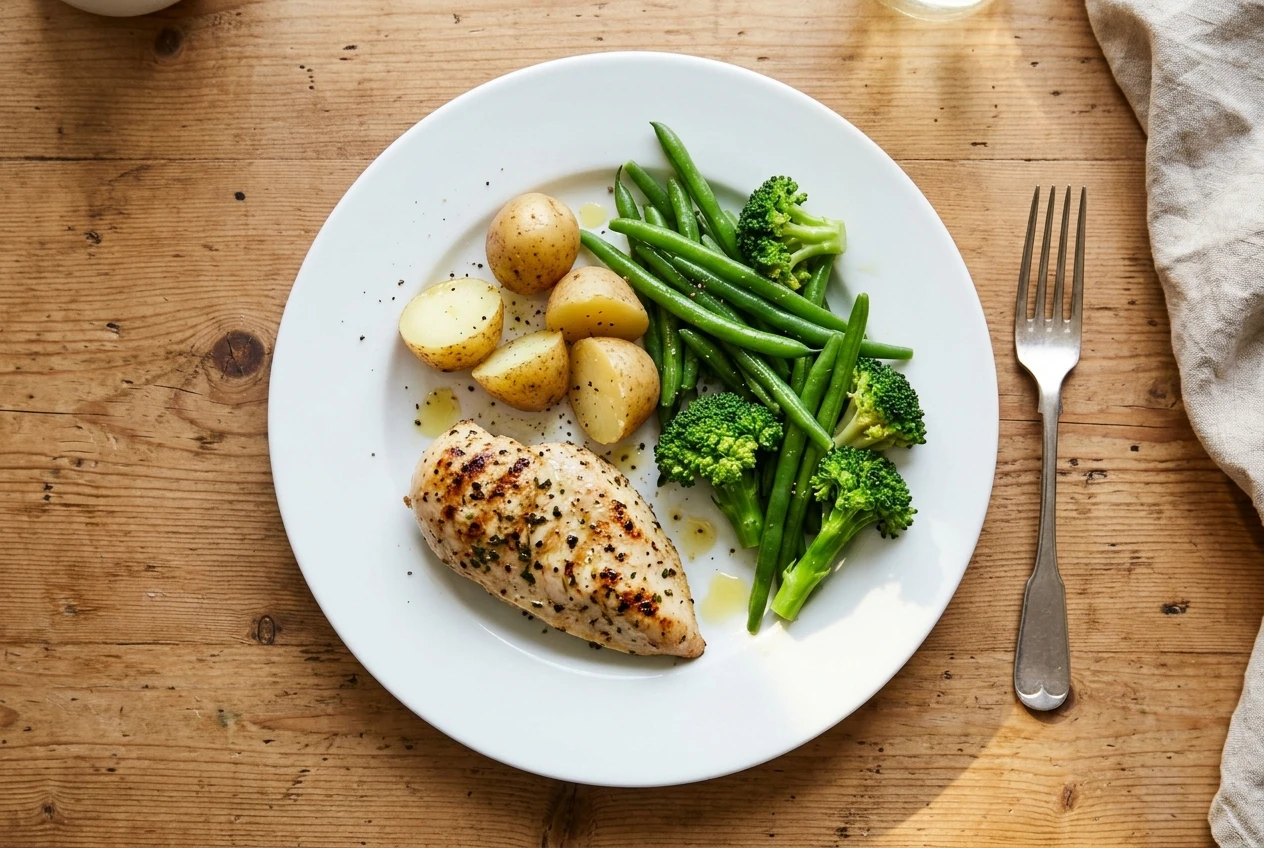
Here are three plates that follow that pattern:
- Grilled chicken, boiled potatoes and a big pile of green beans or broccoli.
- Scrambled eggs on wholegrain toast with grilled tomatoes and spinach.
- Salmon, a small portion of rice and a side salad.
Add a little olive oil, avocado or nuts for fat if the plate looks dry.
Fat is fine in a post-workout meal, and it makes the meal more filling, which helps if you are watching your weight.
Should I Eat Differently After Legs, Shoulders and Back, or Chest and Arms?
You can eat the same basic plate after all three sessions, and let your appetite decide the portion sizes.
The 3-day, 30-minute split trains legs first, then shoulders and back, then chest and arms, on non-consecutive days.
Legs involve the largest muscles in your body, so many people feel hungrier afterwards.
After legs, make the plate generous: a full palm of protein, a full fist of carbohydrate such as rice or potatoes, and plenty of vegetables.
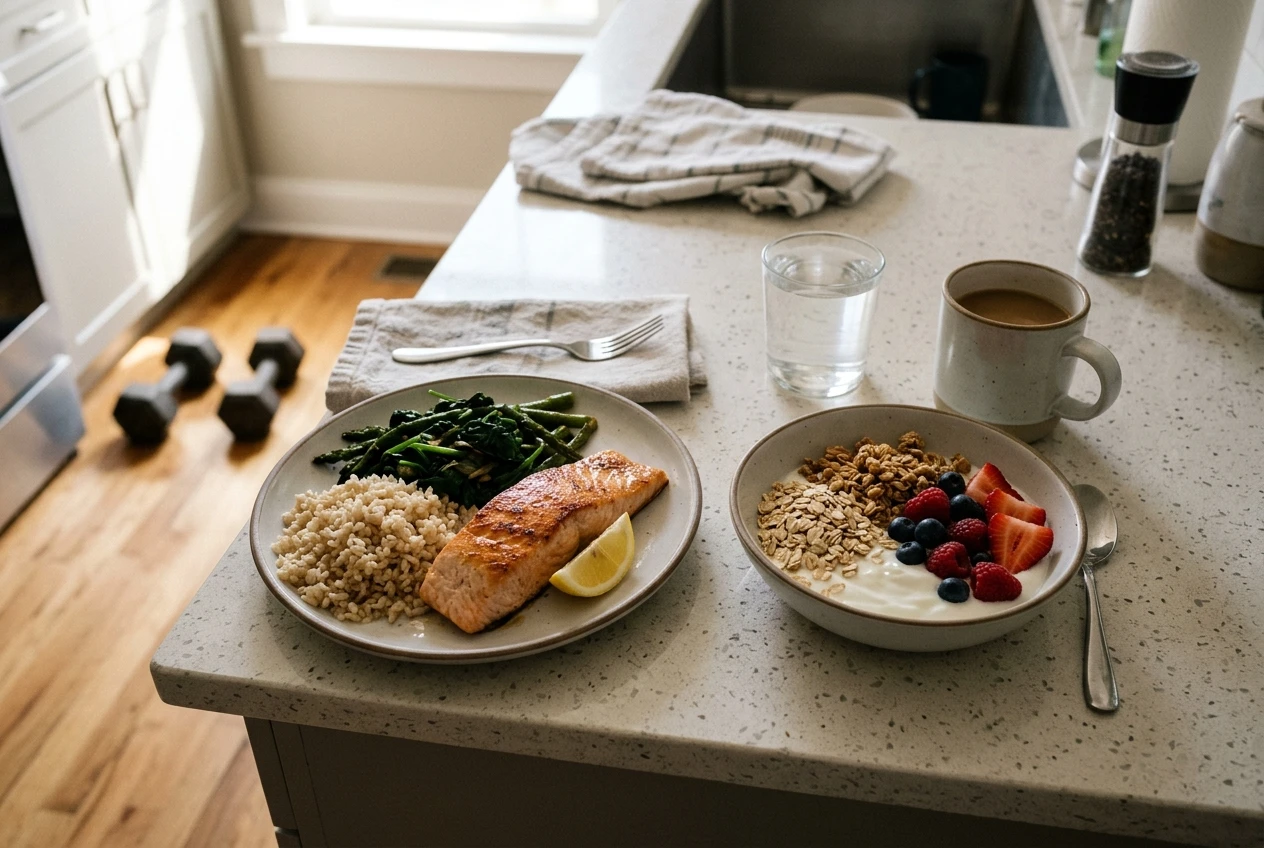
After shoulders and back, a plate like salmon, new potatoes and greens, or eggs on wholegrain toast, covers everything you need.
After chest and arms, the session is often the one you feel hungriest after least, so a lighter option such as Greek yogurt with oats and berries, or cottage cheese on toast, works well.
None of this is a strict rule, and the useful habit is to include protein every time.
What If I Am Not Hungry or I Train First Thing in the Morning?
If you are not hungry after training, eat something small now and a proper meal when your appetite returns.
Hard sessions can dull your appetite for a while, especially in warm weather or after a morning workout.
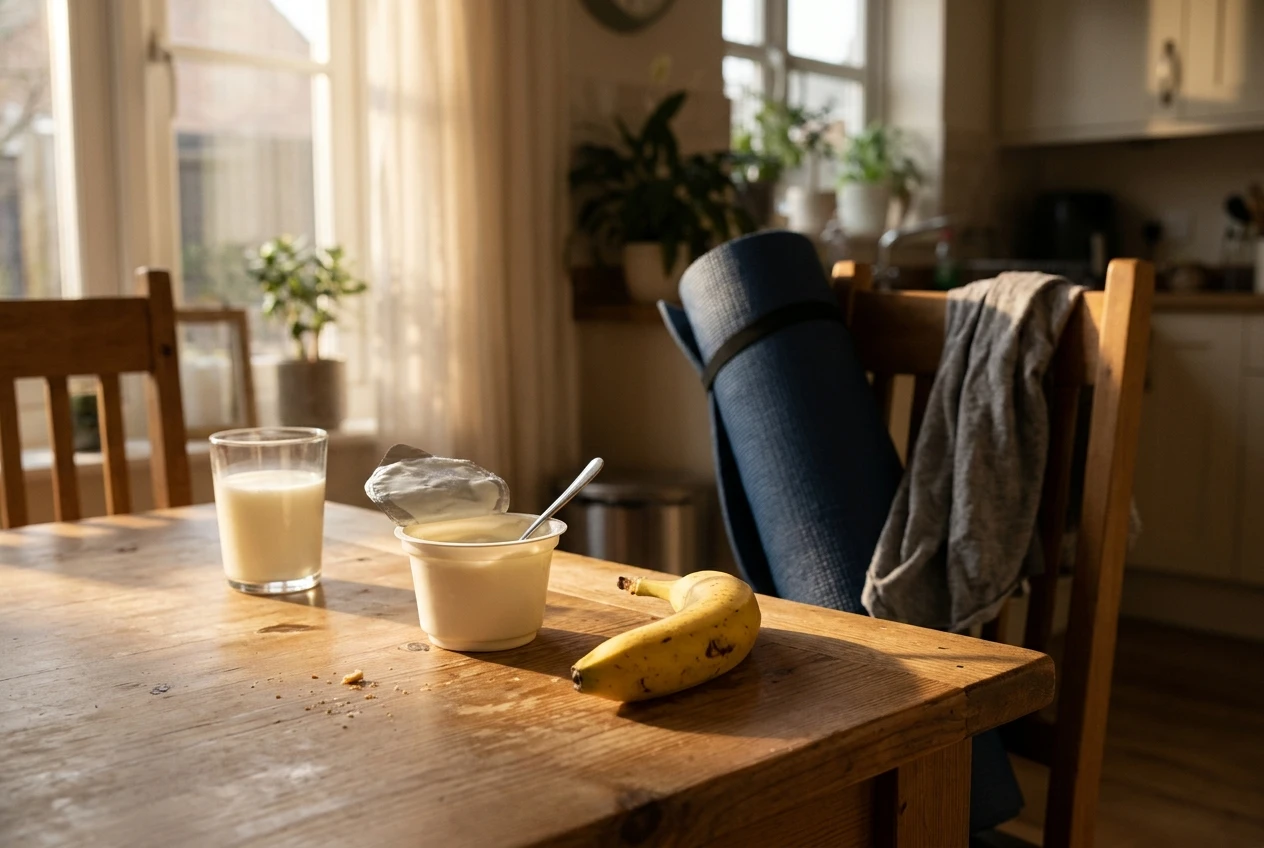
Easy options when food feels like too much:
- A pot of Greek yogurt with a banana
- A glass of milk and a piece of fruit
- A boiled egg or two with a slice of toast
- A small smoothie made with milk or yogurt and fruit
If you train first thing in the morning, you can have breakfast afterwards as your post-workout meal.
Some people feel fine lifting before they eat, while others feel shaky or weak, and if that is you, have a banana or a slice of toast beforehand.
Pay attention to dizziness or light-headedness, and talk to your doctor if it keeps happening.
How Do I Stop Feeling Guilty About Eating After Exercise?
Stop treating the workout as something you have to pay for with food.
Many people who start training with weight loss in mind see exercise as a way to “earn” or “burn off” meals, and that link makes every plate feel like a debt.
A more useful way to see it is that you train to get stronger, and you eat so your body can make that happen.

A few habits help:
- Decide on your post-workout meal before the session, so you are not bargaining with yourself afterwards.
- Eat it sitting down, without rushing, and without counting what the workout “burned”.
- Judge your progress by your weights, your energy and how your clothes fit, not by whether you ate less than yesterday.
If the guilt is heavy or it comes with restricting or bingeing, speak to your doctor or a counsellor.
Strength training can also lift your mood, which I cover in what strength training does to your brain after 50.
Feeling better in your head tends to make eating well easier.
Where Do Sleep, Rest Days and Gut Health Fit In?
Sleep, rest days and gut health support your post-workout meal, and they do not replace it.
Three short, hard workouts a week on non-consecutive days leave you a rest day between sessions, and that gap is when your muscles do most of their rebuilding.
Good sleep makes that rebuilding work better, and I go through that in how to recover after 50.
Your gut matters because you absorb what you eat through it, and fibre from vegetables, fruit, oats, beans and wholegrains helps keep it working.
If you are wondering whether a gut supplement is worth buying, this guide to natural gut health supplements after 50 looks at what holds up and what is hype.
For most people, a varied plate with vegetables on it does more for the gut than a pill.
If you are weighing up a shake against real food for your post-workout meal, read Protein Powder vs Whole Food: Which Builds More Muscle After 50? next.